Stinking passionflower (Passiflora foetida)
Care, watering, light and tips for Stinking passionflower on Floravia.
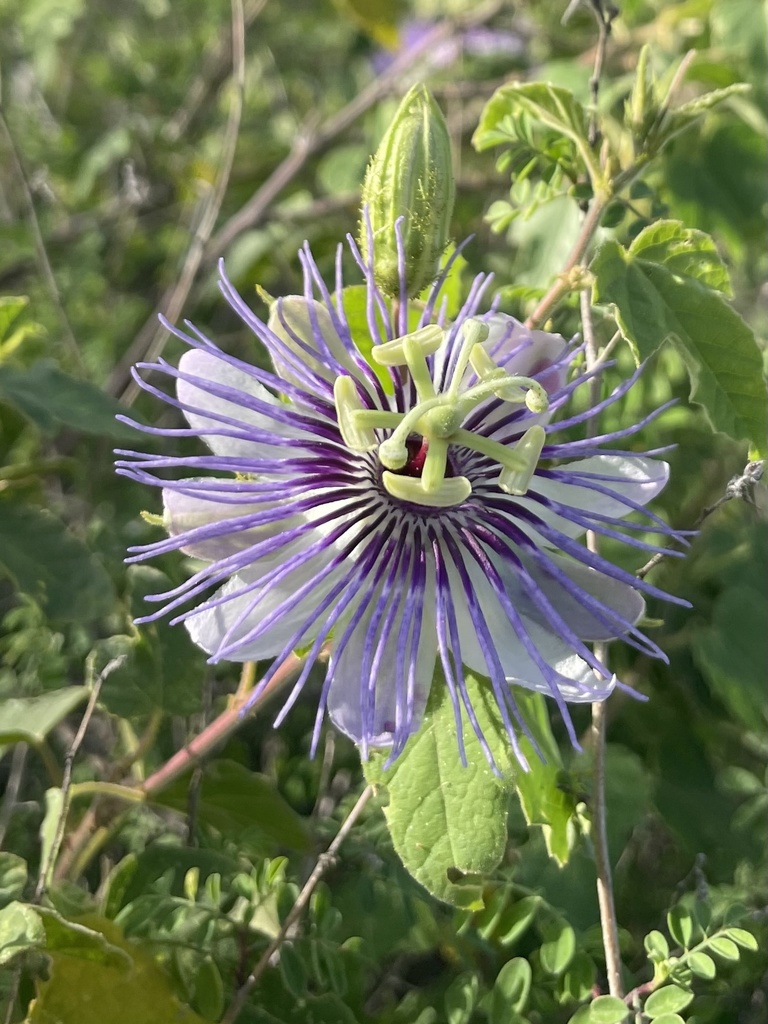
Quick facts
- Family: Passifloraceae
- Difficulty: Easy to care for
- Watering: every 3 days
- Light: Partial shade
- Temperature: 10–30 °C
- Toxicity: Toxic to pets
About Stinking passionflower
Passiflora foetida, also known as wild maracuja or stinking passionflower, is a fast-growing tropical climbing vine renowned for its delicate white or pale flowers and small, edible orange fruits. Its unusual, lace-like foliar bracts give it a distinctive appearance. It is ideal for covering pergolas, fences, or walls in warm climates, adding an exotic and natural touch to any garden.
Native range
Tropical and subtropical Americas, from the southern United States to South America, including the Caribbean.
Care tips
It prefers full to partial sunlight; the more light it receives, the more flowers it will produce. Regular watering is required to keep the substrate moist but not waterlogged, especially during its growth and flowering period. It adapts to a variety of soils but prefers one that is well-drained and rich in organic matter. A common mistake is a lack of adequate support, which can hinder its climbing development and reduce flowering.
How to save a dying Stinking passionflower
- Warning signs
- Yellow/brown, wilting leaves, soft stems. Pests like spider mites or whiteflies may appear.
- First aid
- Check soil (not waterlogged, not dry). Prune dead parts. Isolate if pests, treat with neem oil/insecticidal soap.
- What kills it
- Overwatering or lack of light. Also cold drafts or frost. It's cold-sensitive.
- Can it be saved?
- Yes, if you act quickly and correct the issue. It's a resilient plant with proper care.