Common hackberry (Celtis occidentalis)
Care, watering, light and tips for Common hackberry on Floravia.
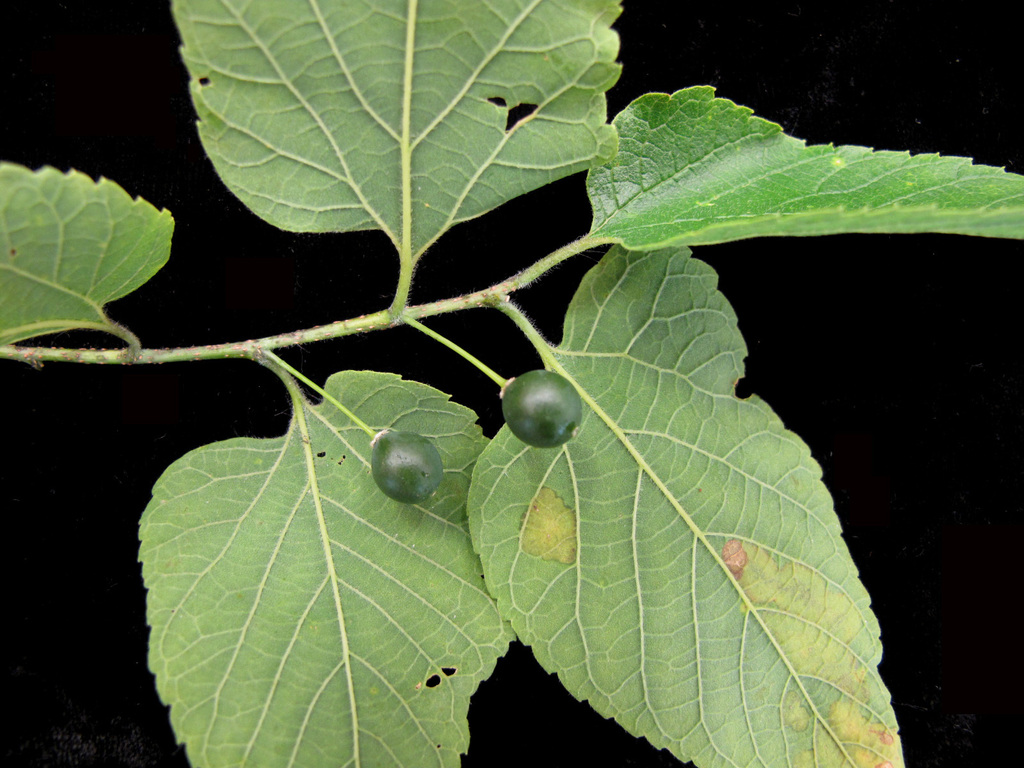
Quick facts
- Family: Cannabaceae
- Difficulty: Easy to care for
- Watering: every 7 days
- Light: Partial shade
- Temperature: 10–30 °C
About Common hackberry
Celtis occidentalis, commonly known as Western Hackberry, is a deciduous tree native to North America, valued for its hardiness and distinctive warty, cork-like bark that provides significant ornamental interest. Its dark green oval leaves and small, edible berries make it attractive to both wildlife and landscape designers. It is an excellent choice for parks, large gardens, and urban street tree plantings, where it can offer shade and structural beauty.
Native range
North America (primarily United States and southern Canada)
Care tips
Western Hackberry thrives in full sun to partial shade, showing great adaptability to various light conditions. It is drought-tolerant once established, although regular watering during dry spells will promote optimal growth. It prefers well-drained soils, from sandy to clay, and is highly resistant to pollution and soil compaction. A common mistake to avoid is planting it in spaces that are too small, as it can reach a considerable size.
How to save a dying Common hackberry
- Warning signs
- Wilting or yellowing leaves, premature leaf drop, dry or brittle branches.
- First aid
- Check watering and drainage. If potted, repot to larger pot with fresh soil. Protect from strong winds.
- What kills it
- Constant waterlogging, prolonged drought when young, lack of root space.
- Can it be saved?
- Yes, if roots are not completely rotted or dry and there are living branches.