Sugarberry (Celtis laevigata)
Care, watering, light and tips for Sugarberry on Floravia.
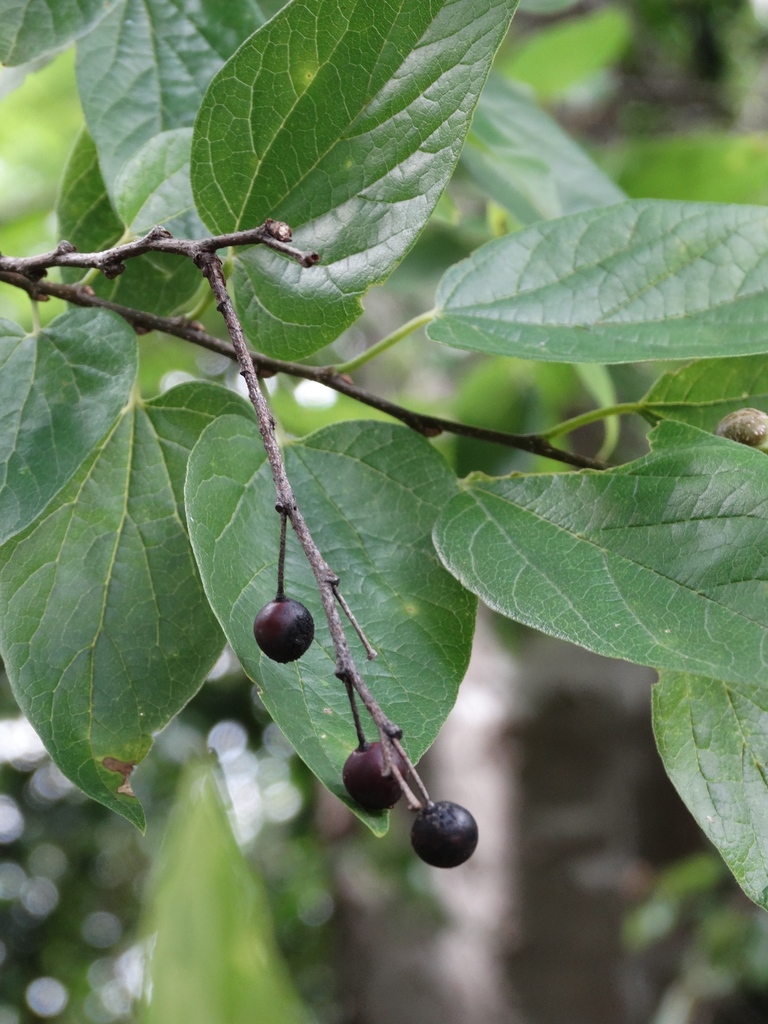
Quick facts
- Family: Cannabaceae
- Difficulty: Easy to care for
- Watering: every 7 days
- Light: Partial shade
- Temperature: 10–30 °C
About Sugarberry
Celtis laevigata, commonly known as Sugarberry or Southern Hackberry, is a medium to large deciduous tree native to North America. It is characterized by its smooth, grayish bark that becomes warty with age, and its small, sweet berries that are an important food source for wildlife. It is an excellent choice for large gardens, parks, and as a shade tree in urban and rural areas due to its hardiness and adaptability.
Native range
Southeastern United States and northeastern Mexico
Care tips
This tree is highly adaptable and tolerates a wide range of conditions, preferring full sun to partial shade. Once established, it is very drought tolerant but benefits from occasional watering during prolonged dry periods, especially when young. It adapts to various soil types, including clay and sandy, as long as they have good drainage. Avoid planting it in very confined spaces, as it can grow quite large and its roots may lift pavements.
How to save a dying Sugarberry
- Warning signs
- Wilted or yellowing leaves, premature leaf drop, dry or brittle branches.
- First aid
- Check watering and drainage. Prune dead branches. Protect from extreme stress (drought/overwatering).
- What kills it
- Overwatering causing root rot, or prolonged drought in young specimens.
- Can it be saved?
- Yes, it's a resilient species. Prompt action significantly increases chances of recovery.