Rostrate dodder (Cuscuta rostrata)
Care, watering, light and tips for Rostrate dodder on Floravia.
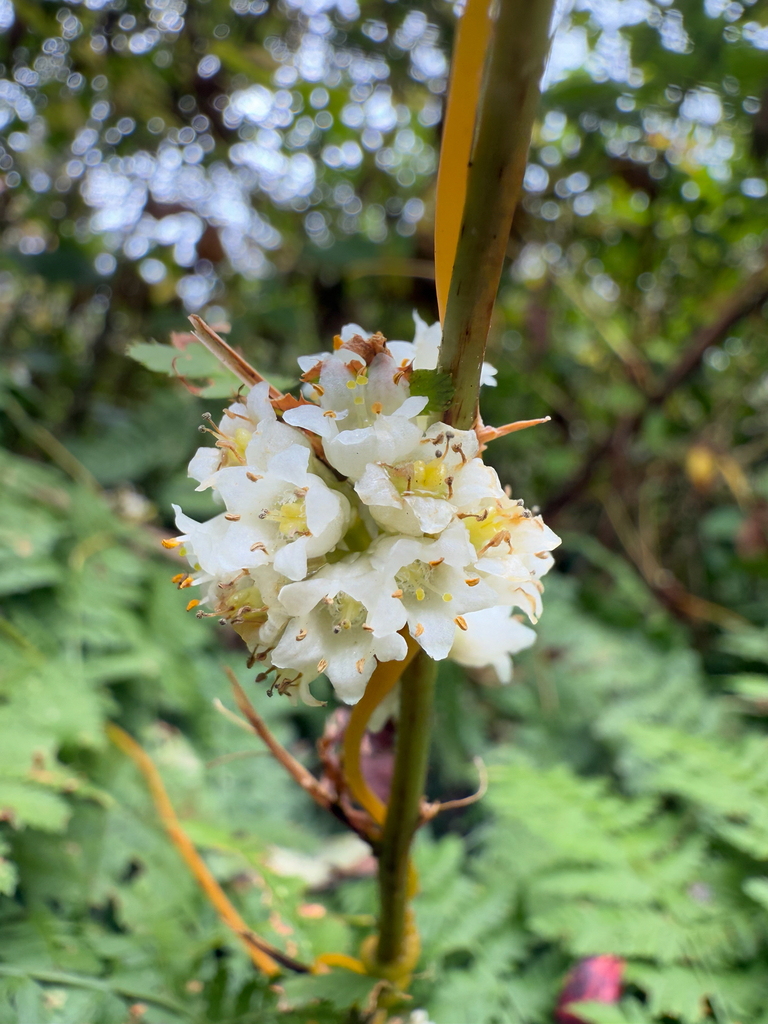
Quick facts
- Family: Convolvulaceae
- Difficulty: Moderate care
- Watering: every 7 days
- Light: Partial shade
- Temperature: 10–30 °C
- Toxicity: Toxic to pets
About Rostrate dodder
Cuscuta rostrata, or 'Appalachian Dodder', is an annual parasitic plant native to the Appalachians, appearing as a leafless mass of slender, orange-yellow or reddish stems. It twines around and extracts nutrients from a variety of host plants, creating an ethereal, almost ghostly appearance. It's a fascinating plant for botanical studies or those interested in natural ecosystems, but not a traditional garden ornamental.
Native range
Eastern North America, from New York to Georgia.
Care tips
As a parasitic plant, Cuscuta rostrata is not cultivated in the conventional sense; it requires a host plant to survive. It does not need watering or its own substrate, as it obtains water and nutrients from its host through haustoria. Its care involves managing the host plant and observing its life cycle. A common mistake would be to try to grow it in a pot without a suitable host, which would result in its rapid demise.
How to save a dying Rostrate dodder
- Warning signs
- General wilting, lack of vigor in its filaments, unusual yellowish or whitish discoloration, or failure to attach to its host plant.
- First aid
- Identify and change the host plant if it's unsuitable or dying. Ensure the Cuscuta has a place to anchor and parasitize. Prune the most affected parts.
- What kills it
- Failing to find or losing a suitable host. Cuscuta is an obligate parasite; without an anchor and food source, it will quickly die.
- Can it be saved?
- Yes, if a compatible and healthy host is quickly provided. If it hasn't anchored, offer young stems of a suitable plant.