Dodder (Cuscuta obtusiflora)
Care, watering, light and tips for Dodder on Floravia.
Quick facts
- Family: Convolvulaceae
- Difficulty: Demanding
- Watering: every 7 days
- Light: Partial shade
- Temperature: 10–30 °C
- Toxicity: Toxic to pets
About Dodder
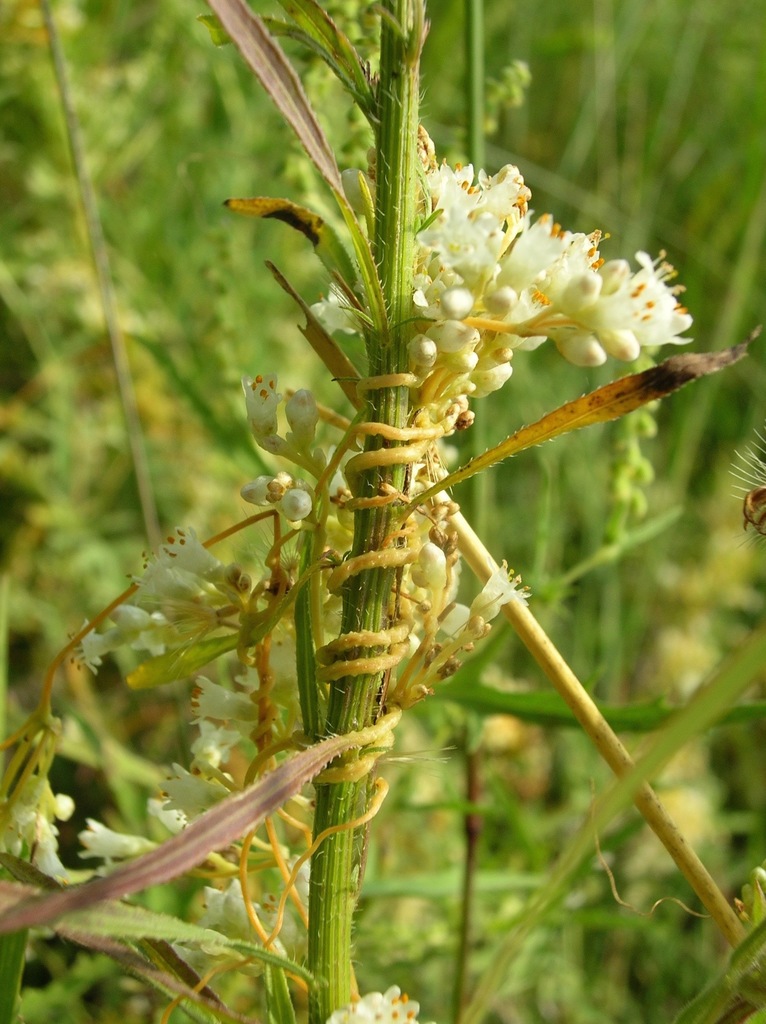
Cuscuta obtusiflora, commonly known as 'Peruvian dodder', is an annual, chlorophyll-lacking parasitic plant that forms tangled masses of slender, thread-like, orange or yellowish stems. It attaches to its host plants via haustoria, extracting nutrients and water. While it can be a pest in agricultural settings, its unique form and life cycle make it a fascinating specimen for botanical studies or for those interested in the ecology of parasitic plants, always with strict control to prevent its spread.
Native range
South America, including Peru, and parts of North and Central America
Care tips
Cuscuta obtusiflora care focuses on its relationship with the host. It requires a susceptible host plant for survival, to which it attaches and from which it extracts all its resources; it does not need its own watering or substrate. Light is indirectly important, as the host needs adequate sunlight to grow and thus support the Cuscuta. The most common mistake to avoid is allowing its uncontrolled spread, as it can severely choke and damage other plants.
How to save a dying Dodder
- Warning signs
- Strands drying, discoloring, or breaking, and the host plant showing weakness.
- First aid
- Identify and remove affected parts, ensuring the host is healthy. Consider a new host.
- What kills it
- Lack of a suitable host or drying out completely before attaching.
- Can it be saved?
- Yes, if you act quickly and find a vigorous new host before it fully perishes.