American dodder (Cuscuta americana)
Care, watering, light and tips for American dodder on Floravia.
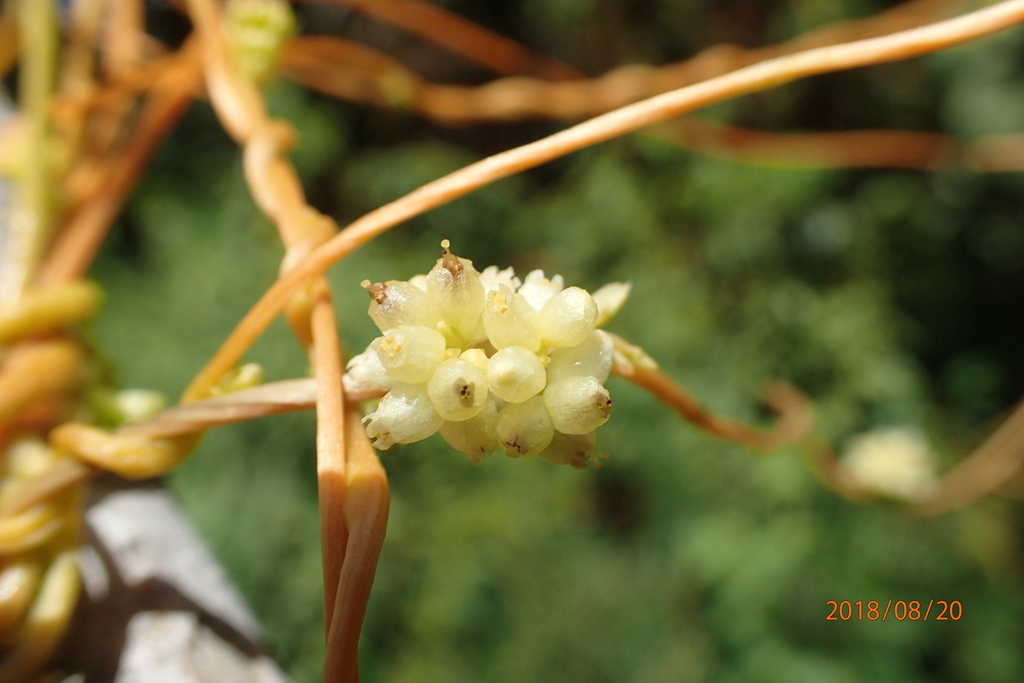
Quick facts
- Family: Convolvulaceae
- Difficulty: Demanding
- Watering: every 7 days
- Light: Partial shade
- Temperature: 10–30 °C
- Toxicity: Toxic to pets
About American dodder
Cuscuta americana, known as American Dodder, is an annual parasitic plant characterized by its thread-like, yellow to orange stems that lack leaves and twine around host plants. It is not an ornamental garden plant but rather a species of botanical interest due to its unique lifestyle, growing on other plants to obtain its nutrients. It is commonly found in areas with dense vegetation, parasitizing a wide variety of herbaceous and shrubby species.
Native range
North and South America
Care tips
As a parasitic plant, Cuscuta americana does not require traditional gardening care, as its survival is entirely dependent on the presence of a suitable host plant. It does not need watering, fertilization, or a specific type of substrate, as it absorbs water and nutrients directly from its host. The main 'care' for this species would be to ensure an environment where it can find appropriate host plants, such as fields or roadsides with dense vegetation. A common mistake to avoid, if its spread is not desired, is allowing its seeds to mature and disperse, as it can become a weed if it infests crops or desired ornamental plants.
How to save a dying American dodder
- Warning signs
- Threads drying, becoming brittle, or losing their yellowish/orange color. Lack of growth on the host.
- First aid
- Identify and isolate the infected host. Prune dry dodder sections. Strengthen host health.
- What kills it
- Trying to pull it without removing haustoria. Leaving it without a host. Not acting promptly.
- Can it be saved?
- Yes, if acted upon quickly. Manual removal before seed production is key.