Reflexed dodder (Cuscuta reflexa)
Care, watering, light and tips for Reflexed dodder on Floravia.
Quick facts
- Family: Convolvulaceae
- Difficulty: Demanding
- Watering: every 7 days
- Light: Partial shade
- Temperature: 10–30 °C
- Toxicity: Toxic to pets
About Reflexed dodder
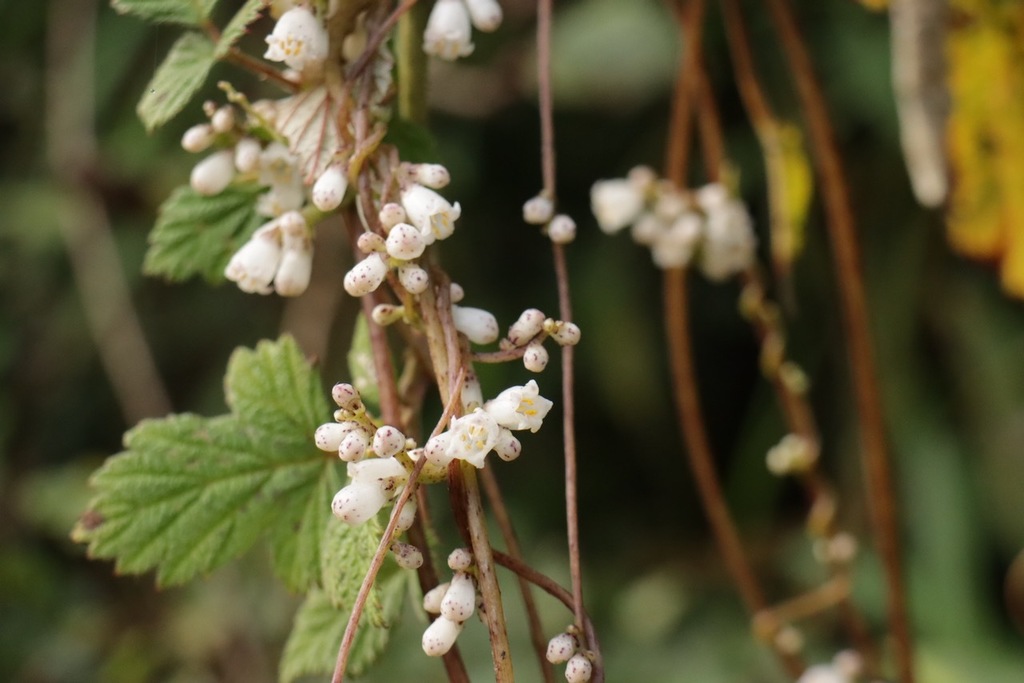
Cuscuta reflexa, also known as 'Giant dodder', is an annual or perennial parasitic plant native to Asia. It is characterized by its filamentous, orange-yellow stems that lack leaves and entwine themselves around host plants. This species is interesting for botanical studies or for those interested in plant parasitism, but it is not cultivated for ornamental purposes.
Native range
Tropical and subtropical Asia, from the Indian subcontinent to Southeast Asia
Care tips
As a parasitic plant, Cuscuta reflexa is not cultivated in the traditional sense. Its 'care' involves the presence of a suitable host plant from which it will extract nutrients and water. It does not require specific watering or substrate, as its haustoria attach to the host plant. The main 'mistake' to avoid, if its spread is not desired, is allowing its seeds to germinate near other plants, as it can become a difficult-to-eradicate pest.
How to save a dying Reflexed dodder
- Warning signs
- Threads drying, becoming brittle, losing their orange/yellow color. Lack of adherence to the host plant.
- First aid
- Identify and improve the host plant's health. Carefully remove severely affected parts to encourage new growth.
- What kills it
- Host plant destruction or lack of a suitable host. Non-specific herbicide use.
- Can it be saved?
- Yes, if the host plant is healthy and allowed to grow, it will recover. It needs a strong host to thrive.