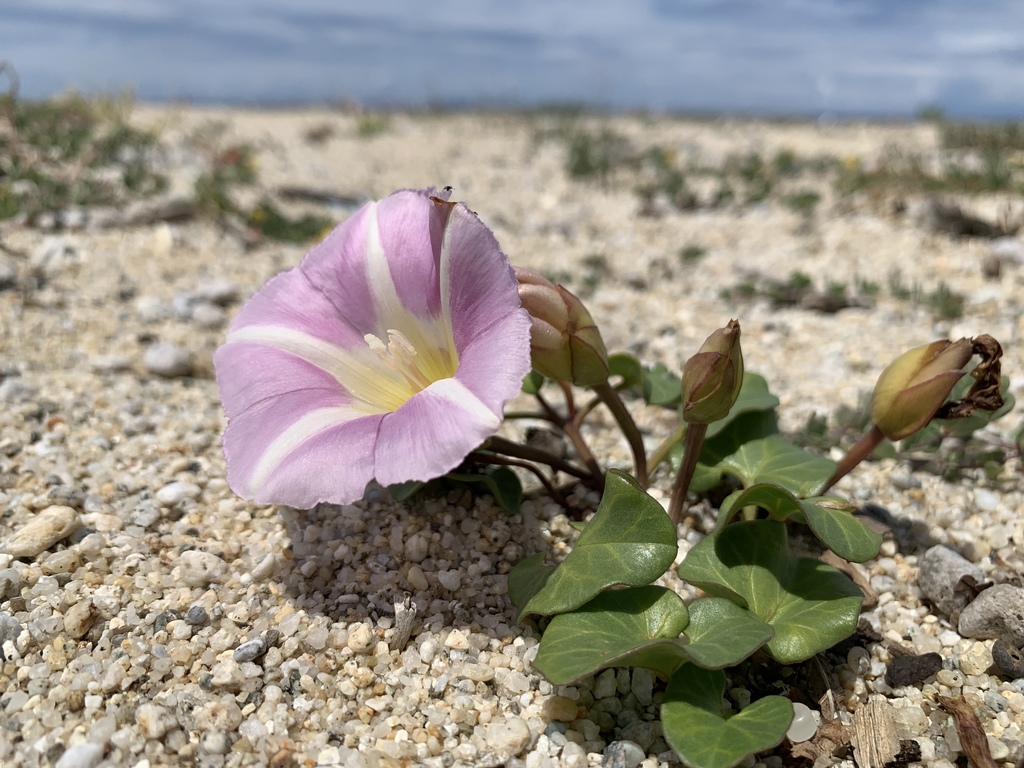
Sea bindweed (Calystegia soldanella)
Care, watering, light and tips for Sea bindweed on Floravia.
Quick facts
- Family: Convolvulaceae
- Difficulty: Moderate care
- Watering: every 7 days
- Light: Partial shade
- Temperature: 10–30 °C
- Toxicity: Toxic to pets
About Sea bindweed
Calystegia soldanella, commonly known as sea bindweed, is a perennial trailing vine belonging to the Convolvulaceae family, characterized by its fleshy, kidney-shaped leaves and delicate, pale pink to lavender trumpet-shaped flowers. It is an ideal plant for stabilizing coastal dunes, covering slopes, or as a trailing plant in pots and hanging baskets, where its groundcover nature can be fully displayed. Its attractive flowers and salt-tolerant nature make it perfect for coastal gardens or xeriscaping.
Native range
Temperate and cold coasts of both hemispheres, including Europe, Asia, North America, and South America.
Care tips
It requires full sun for optimal flowering and prefers sandy, well-drained, even poor soils, tolerating salinity. Watering should be moderate, allowing the substrate to dry out completely between waterings, as it is susceptible to waterlogging and root rot. A common mistake is planting it in heavy, clay soils, which hinders drainage and the plant's health. It is a low-maintenance plant once established.
How to save a dying Sea bindweed
- Warning signs
- Wilting or yellowing leaves, soft stems, no flowering. May indicate overwatering or poor soil.
- First aid
- If potted, check drainage. If in ground, add sand. Reduce watering. Repot if soil is too clayey.
- What kills it
- Waterlogging is its worst enemy. Also, compact or overly rich organic soils and low light.
- Can it be saved?
- Yes, if you act fast. It's quite resilient. Improve drainage and sun exposure. It recovers with patience.