Cuscuta psorothamnensis
Care, watering, light and tips for Cuscuta psorothamnensis on Floravia.
Quick facts
- Family: Convolvulaceae
- Difficulty: Moderate care
- Watering: every 7 days
- Light: Partial shade
- Temperature: 10–30 °C
- Toxicity: Toxic to pets
About Cuscuta psorothamnensis
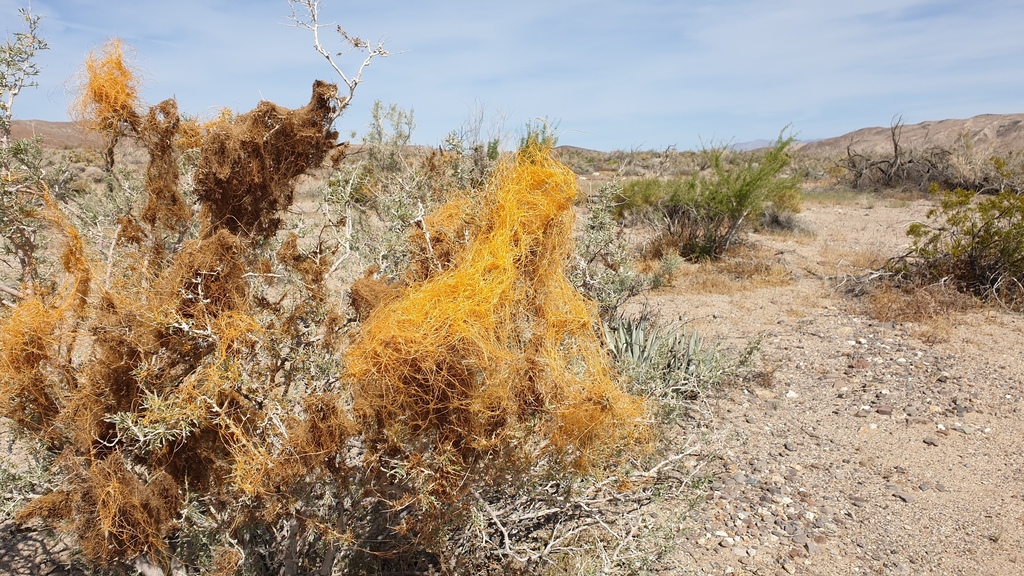
Cuscuta psorothamnensis, commonly known as 'indigo bush dodder', is an annual parasitic plant native to the southwestern United States. It is characterized by its yellow or orange filamentous stems that lack leaves and entwine around other plants, extracting nutrients. It is not an ornamental plant for gardens, but rather a fascinating organism for botanical study in its natural habitat or controlled environments.
Native range
Southwestern United States and northwestern Mexico.
Care tips
As an obligate parasitic plant, Cuscuta psorothamnensis is not cultivated in the traditional sense. Its survival is entirely dependent on the presence of a suitable host plant, such as Psorothamnus. It does not require specific watering or substrate, as it obtains everything it needs from its host. The most common mistake would be to attempt to grow it independently without a host plant, which would result in its inevitable demise.
How to save a dying Cuscuta psorothamnensis
- Warning signs
- Discoloration, drying, or wilting of the yellow/orange stems. Lack of growth or attachment to a host.
- First aid
- Ensure it's well-anchored to a healthy host plant. If loose, carefully reattach it.
- What kills it
- Failing to find or losing its host plant quickly. Cuscuta is an obligate parasite and cannot survive without it.
- Can it be saved?
- Yes, if you act quickly and provide a suitable host before its reserves are depleted.