Texas sage (Leucophyllum frutescens)
Care, watering, light and tips for Texas sage on Floravia.
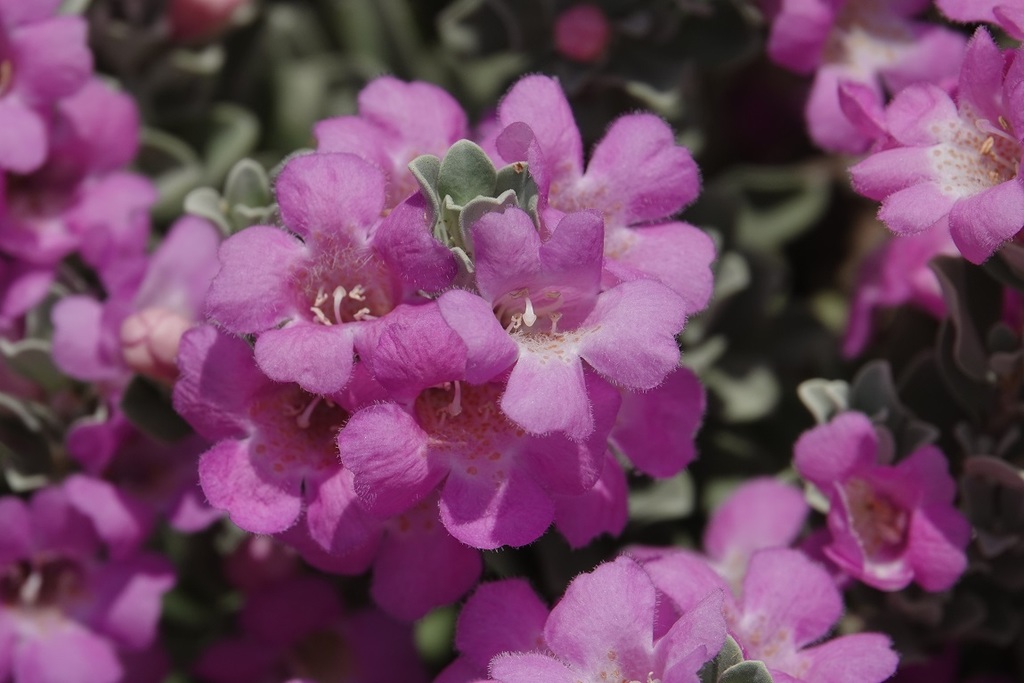
Quick facts
- Family: Scrophulariaceae
- Difficulty: Easy to care for
- Watering: every 10 days
- Light: Partial shade
- Temperature: 10–30 °C
About Texas sage
Leucophyllum frutescens, commonly known as Texas Barometer Bush or Texas Sage, is an evergreen ornamental shrub native to the southwestern United States and Mexico. It is prized for its silvery-gray foliage and profuse tubular flowers in shades of pink, purple, or white that bloom after rainfall, creating a striking visual display. It is ideal for xeriscaping, rock gardens, and as a low hedge, adding color and texture to arid climates.
Native range
Southwestern United States and northern Mexico
Care tips
It thrives in full sun, which is essential for optimal blooming and compact growth. This plant is extremely drought-tolerant once established, so watering should be minimal and infrequent, allowing the soil to dry out completely between waterings. It prefers well-drained soils, even poor or rocky ones; overwatering is the most common mistake to avoid, as it can lead to root rot. Prune lightly after flowering to maintain shape and encourage dense growth.
How to save a dying Texas sage
- Warning signs
- Soft, wilted or excessive leaf drop. Dry, brittle stems.
- First aid
- Move to partial shade, water moderately only if soil is dry. Prune dead branches.
- What kills it
- Overwatering (root rot) and lack of direct sun (no blooms, weakens).
- Can it be saved?
- Yes, if roots aren't completely rotted and green stems remain. Very hardy.