Common mullein (Verbascum thapsi)
Care, watering, light and tips for Common mullein on Floravia.
Quick facts
- Family: Scrophulariaceae
- Difficulty: Easy to care for
- Watering: every 7 days
- Light: Partial shade
- Temperature: 10–30 °C
- Toxicity: Toxic to pets
About Common mullein
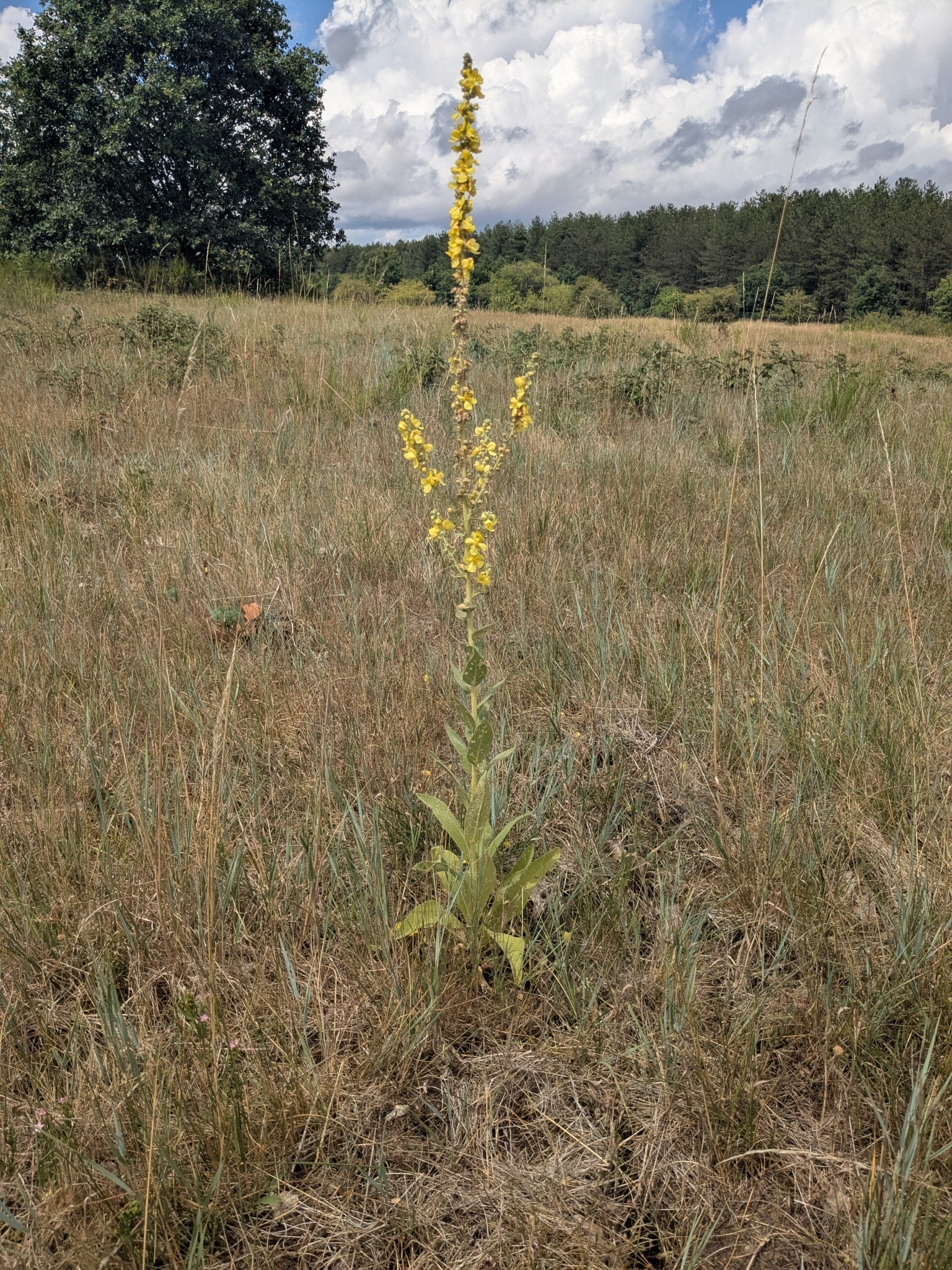
Verbascum thapsus, commonly known as Great Mullein or Common Mullein, is a robust biennial plant that produces a basal rosette of large, soft, woolly leaves in its first year, followed by a tall, erect flowering stem in its second year, which can reach up to 2 meters in height. This stem is densely covered with bright yellow flowers, clustered in a terminal spike. It is ideal for naturalistic gardens, meadows, or as a vertical focal point in sunny, dry borders.
Native range
Europe and temperate Asia
Care tips
Great Mullein thrives in full sun and well-drained soils, even poor or rocky ones, as it is highly drought-tolerant once established. Watering should be minimal, only during extreme dry spells, as excessive moisture can lead to root rot. A common mistake is planting it in partial shade or heavy, wet soils, which diminishes its flowering and vigor. It does not require fertilization, as it prefers low-nutrient conditions.
How to save a dying Common mullein
- Warning signs
- Yellowing, wilting, or rotting basal leaves, soft stem, no flowering.
- First aid
- Check soil drainage and moisture. If potted, consider repotting into ground or larger pot with good drainage. Remove damaged leaves and stems.
- What kills it
- Overwatering and heavy, compacted soils that impede drainage. It cannot tolerate constant root moisture.
- Can it be saved?
- Yes, if you act fast. It needs full sun and well-drained soil to recover. It's a drought-tolerant plant.