Common bladderwort (Utricularia vulgaris)
Care, watering, light and tips for Common bladderwort on Floravia.
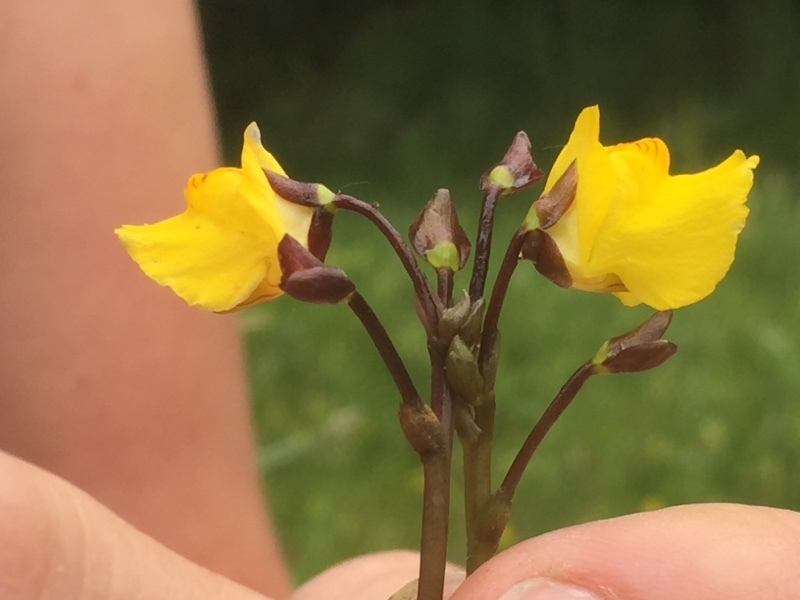
Quick facts
- Family: Lentibulariaceae
- Difficulty: Demanding
- Watering: every 1 days
- Light: Partial shade
- Temperature: 10–30 °C
About Common bladderwort
Utricularia vulgaris, also known as the common bladderwort, is a rootless, free-floating aquatic plant native to freshwaters of Europe, Asia, and Africa. Its submerged stems are adorned with tiny bladders that trap small invertebrates, and in summer, it produces delicate yellow flowers that emerge above the water surface. It is ideal for ponds, cold-water aquariums, or stagnant water containers, adding an exotic and functional touch.
Native range
North America, Europe, and Asia
Care tips
It requires bright sunlight or partial shade and soft water, preferably rainwater or distilled water, to thrive. Keep the water clean and well-oxygenated, avoiding sudden temperature changes. It does not need substrate as it floats freely, and its nutrition is based on the small organisms it captures, so fertilization is not necessary. A common mistake is attempting to grow it in water with high mineral or chlorine content, which will be fatal to it.
How to save a dying Common bladderwort
- Warning signs
- Soft leaves and stems, darkening, lack of trap development. General plant decline.
- First aid
- Check water: must be distilled or rainwater, no chlorine/minerals. Ensure constant humidity and bright, indirect light.
- What kills it
- Tap water with minerals, incorrect substrate (not pure peat/sphagnum), or dryness. Intolerant to salts.
- Can it be saved?
- Yes, if you act fast. A timely water and substrate change can revive it. Be patient.