Common butterwort (Pinguicula vulgaris)
Care, watering, light and tips for Common butterwort on Floravia.
Quick facts
- Family: Lentibulariaceae
- Difficulty: Demanding
- Watering: every 3 days
- Light: Partial shade
- Temperature: 10–30 °C
About Common butterwort
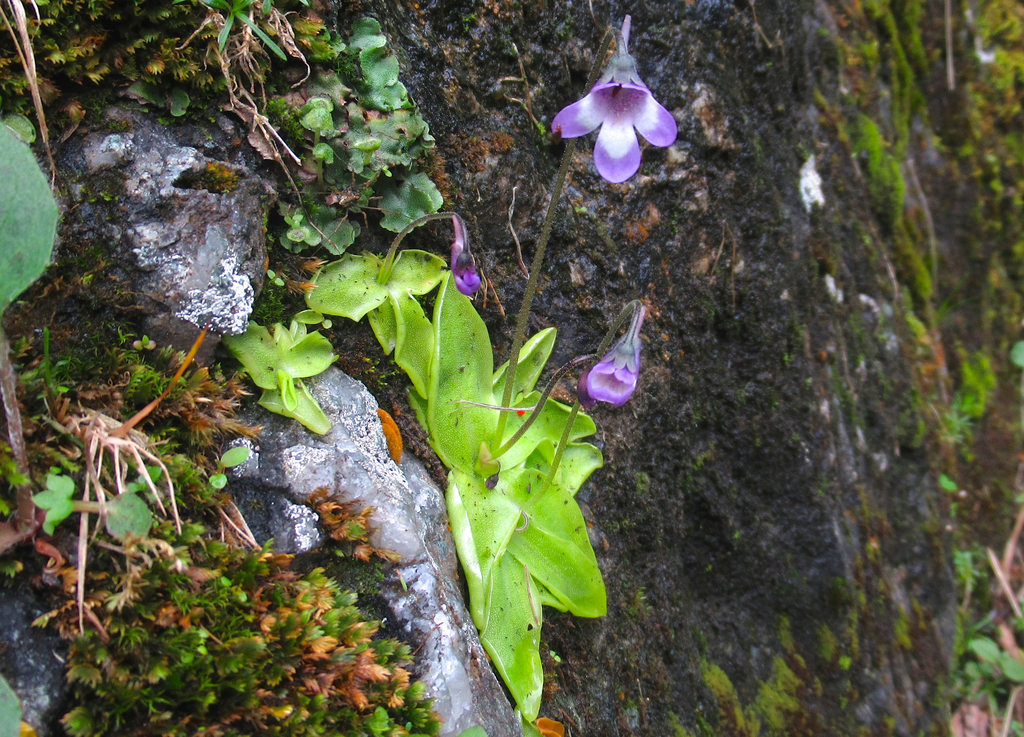
Pinguicula vulgaris, commonly known as 'Tettegras' or 'Common Butterwort', is a small perennial carnivorous plant forming a basal rosette of sticky, light green to reddish leaves. Its leaves, covered with mucilaginous glands, trap small insects. It is ideal for humid terrariums, bog gardens, or shallow pots where its hunting mechanism can be appreciated.
Native range
Arctic and boreal regions of Europe, Asia, and North America
Care tips
It requires bright but indirect light; intense direct sunlight can scorch its leaves. Keep the substrate consistently moist with distilled, rainwater, or demineralized water, preferably using the tray method. Use a nutrient-poor substrate, such as pure sphagnum peat moss or a mix of peat and quartz sand. A common mistake is watering with tap water, which can be fatal due to dissolved minerals.
How to save a dying Common butterwort
- Warning signs
- Leaves soft, sticky, without dew, turning brown or black. General decline.
- First aid
- Move to a cooler, more humid spot. Bottom water with distilled water. Increase ambient humidity.
- What kills it
- Excessive heat, lack of humidity, tap water, or unsuitable substrate (no peat and perlite).
- Can it be saved?
- Yes, if roots aren't rotted. Quick action is key for recovery.