Black-eyed Susan vine (Thunbergia alata)
Care, watering, light and tips for Black-eyed Susan vine on Floravia.
Quick facts
- Family: Acanthaceae
- Difficulty: Easy to care for
- Watering: every 3 days
- Light: Partial shade
- Temperature: 10–30 °C
- Toxicity: Toxic to pets
About Black-eyed Susan vine
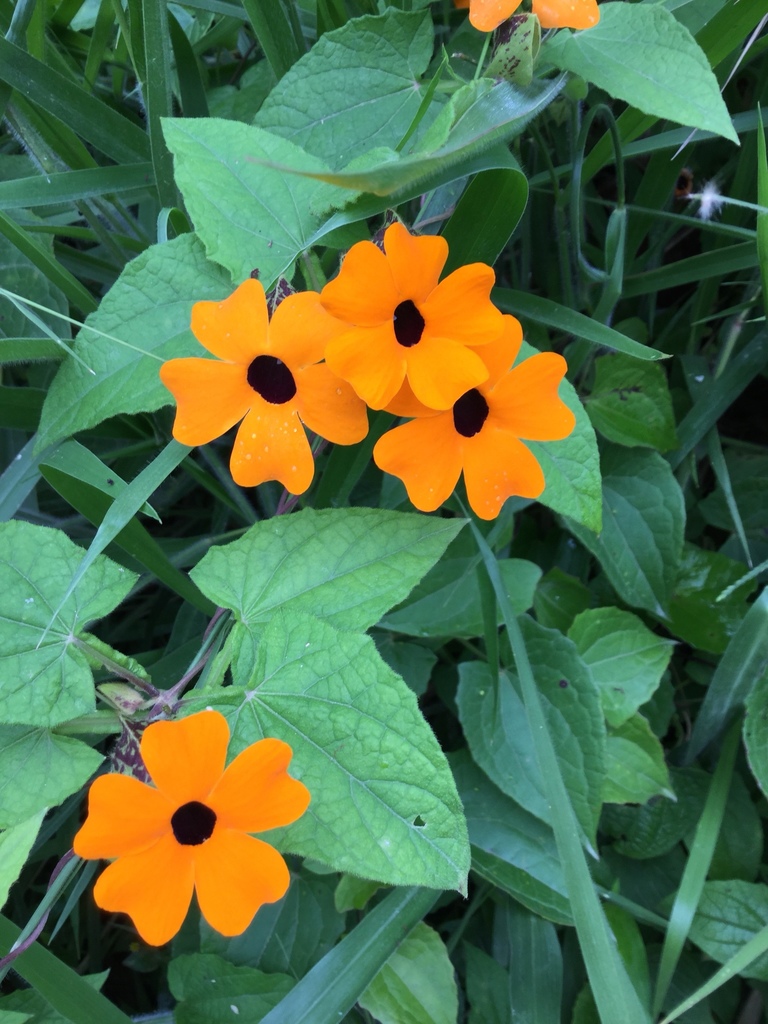
Thunbergia alata, commonly known as Black-eyed Susan Vine, is an attractive perennial tropical climber (often grown as an annual) famed for its five-petaled flowers, typically orange or yellow, with a distinctive dark center. Its vibrant blooms, beautifully contrasting with its bright green foliage, make it ideal for hanging baskets, pergolas, trellises, or for climbing walls and fences, adding a cheerful and exotic touch to any garden or balcony.
Native range
East Africa
Care tips
This vine thrives in full sun to light partial shade, needing at least 6 hours of direct sunlight for optimal flowering. It requires regular and abundant watering, keeping the soil consistently moist but well-drained, especially during warm, dry periods. Use a rich, organic, and well-draining potting mix. A common mistake is failing to provide adequate support for climbing, which can lead to unruly growth and reduced blooming.
How to save a dying Black-eyed Susan vine
- Warning signs
- Yellowish or brown, wilted, dull leaves, flower or bud drop. Stunted or weak growth.
- First aid
- Check soil: if dry, water thoroughly; if waterlogged, aerate and reduce watering. Move to semi-shade if sun is intense. Fertilize lightly.
- What kills it
- Prolonged over or under-watering. Intense full sun exposure without adaptation, burning leaves. Lack of climbing support.
- Can it be saved?
- Yes, if roots aren't completely rotted or dried out. Act fast by correcting watering and exposure. Pruning affected parts helps.