Desert date (Balanites aegyptiaca)
Care, watering, light and tips for Desert date on Floravia.
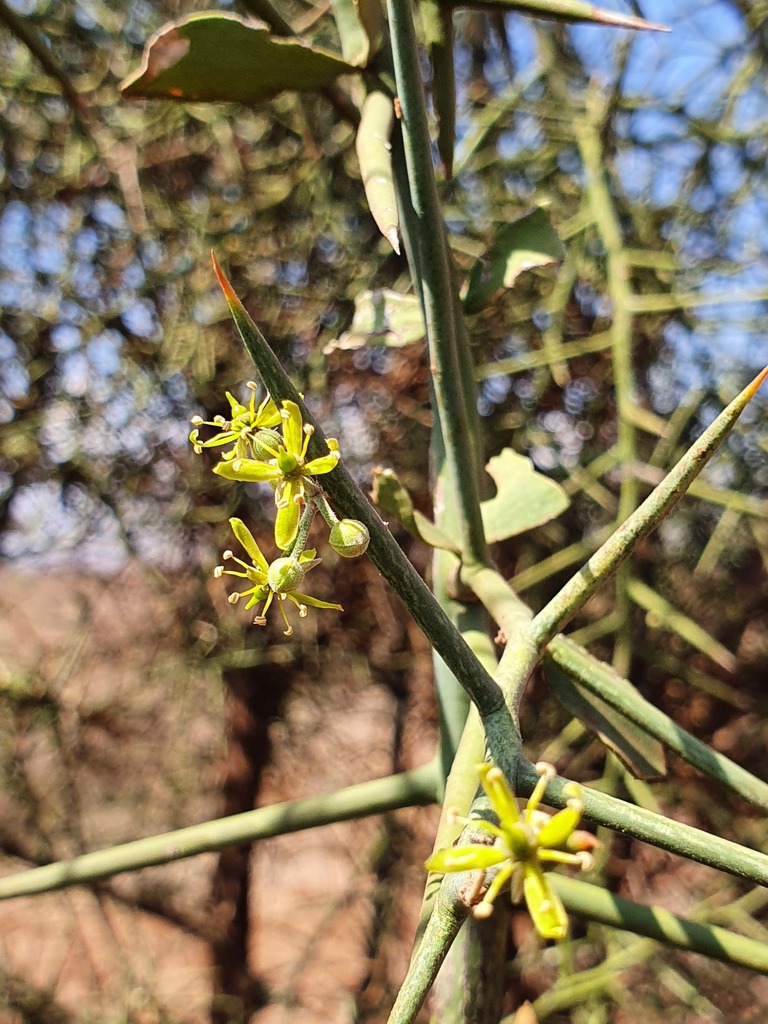
Quick facts
- Family: Zygophyllaceae
- Difficulty: Easy to care for
- Watering: every 15 days
- Light: Partial shade
- Temperature: 10–30 °C
- Toxicity: Toxic to pets
About Desert date
The Desert Date (Balanites aegyptiaca) is a thorny, evergreen or semi-deciduous tree native to arid regions of Africa and the Middle East. It grows up to 10 meters tall, featuring a dense, irregular canopy and edible date-like fruits. It's ideal for xerophytic landscaping, low-maintenance gardens in warm climates, and as a drought-tolerant ornamental specimen.
Native range
Tropical and subtropical Africa, and the Middle East
Care tips
It requires full sun for optimal growth and tolerates intense light well. Watering should be sporadic once established, as it is highly drought-tolerant; overwatering is its greatest enemy. It prefers sandy, well-drained, nutrient-poor soils, with no need for regular fertilization. Avoid planting it in areas with frequent frosts, as it is sensitive to low temperatures.
How to save a dying Desert date
- Warning signs
- Yellowing or premature leaf drop; dry, brittle branches. The plant loses its natural vigor and resilience.
- First aid
- Move to a sunnier spot if in shade. Check soil drainage and moisture; if waterlogged, aerate. Water deeply only when soil is dry.
- What kills it
- Overwatering is the main enemy, rotting the roots. Lack of direct light and extreme cold also fatally weaken it.
- Can it be saved?
- Yes, if roots are not completely rotted and live tissue remains. Act quickly by correcting watering and sun exposure.