Pomelo (Citrus maxima)
Care, watering, light and tips for Pomelo on Floravia.
Quick facts
- Family: Rutaceae
- Difficulty: Moderate care
- Watering: every 7 days
- Light: Full sun
- Temperature: 5–35 °C
- Toxicity: Toxic to pets
About Pomelo
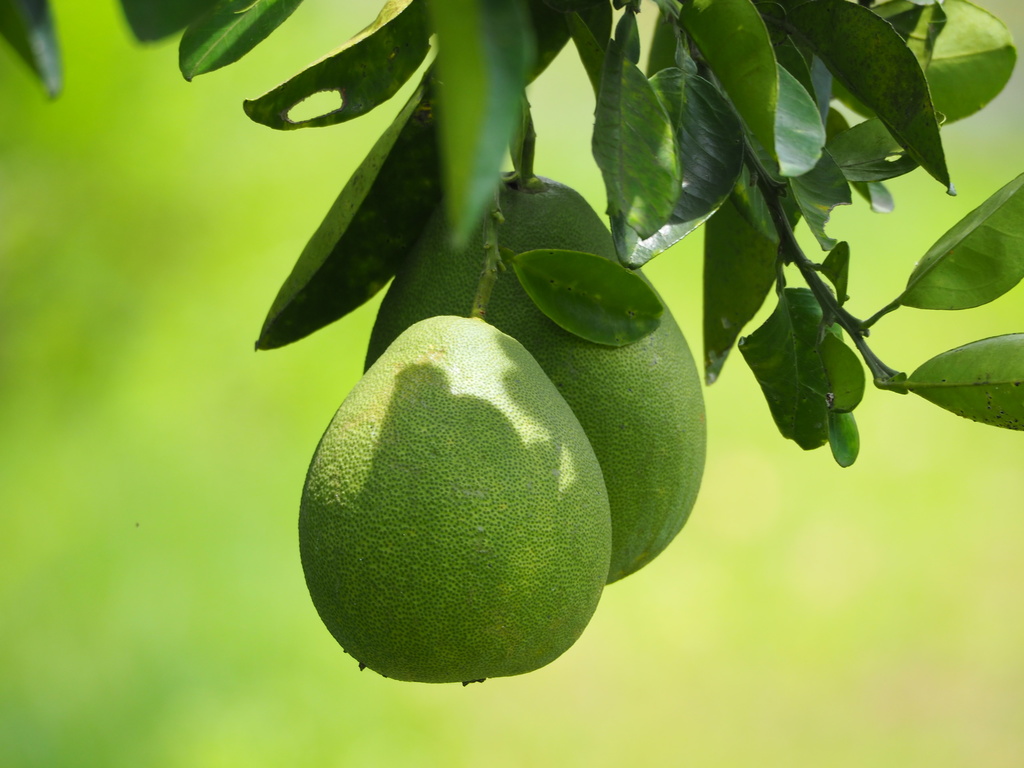
Citrus maxima, known as pomelo or Tsoha bolo, is a fruit tree from the Rutaceae family that produces the largest citrus fruits in the world. Its large, dark green leaves and fragrant flowers make it attractive, ideal for sunny gardens in warm climates or as a specimen in spacious patios. The fruits, with their thick rind and sweet-sour pulp, are a tropical delight.
Native range
Southeast Asia, specifically Malaysia and Indonesia
Care tips
It requires full sun (at least 6-8 hours daily) for optimal fruiting and prefers warm temperatures, being sensitive to frost. Watering should be regular, keeping the substrate moist but not waterlogged, especially during flowering and fruit development. Use a well-drained substrate rich in organic matter, preferably slightly acidic. Avoid excessive nitrogen fertilization at the expense of potassium, which is crucial for fruit set.
How to save a dying Pomelo
- Warning signs
- Yellow leaves with green veins (iron chlorosis), fruit drop, curled or dry leaves, dead branches.
- First aid
- Check drainage and soil pH (ideal 6.0-7.0). Apply chelated iron. Prune dead branches. Deep, infrequent watering.
- What kills it
- Constant waterlogging leading to root rot. Nutrient deficiencies (especially iron and magnesium). Intense cold and frost.
- Can it be saved?
- Yes, if roots aren't completely rotted and the main trunk is undamaged. Act quickly to correct soil and watering.