Bee-bee tree (Tetradium daniellii)
Care, watering, light and tips for Bee-bee tree on Floravia.
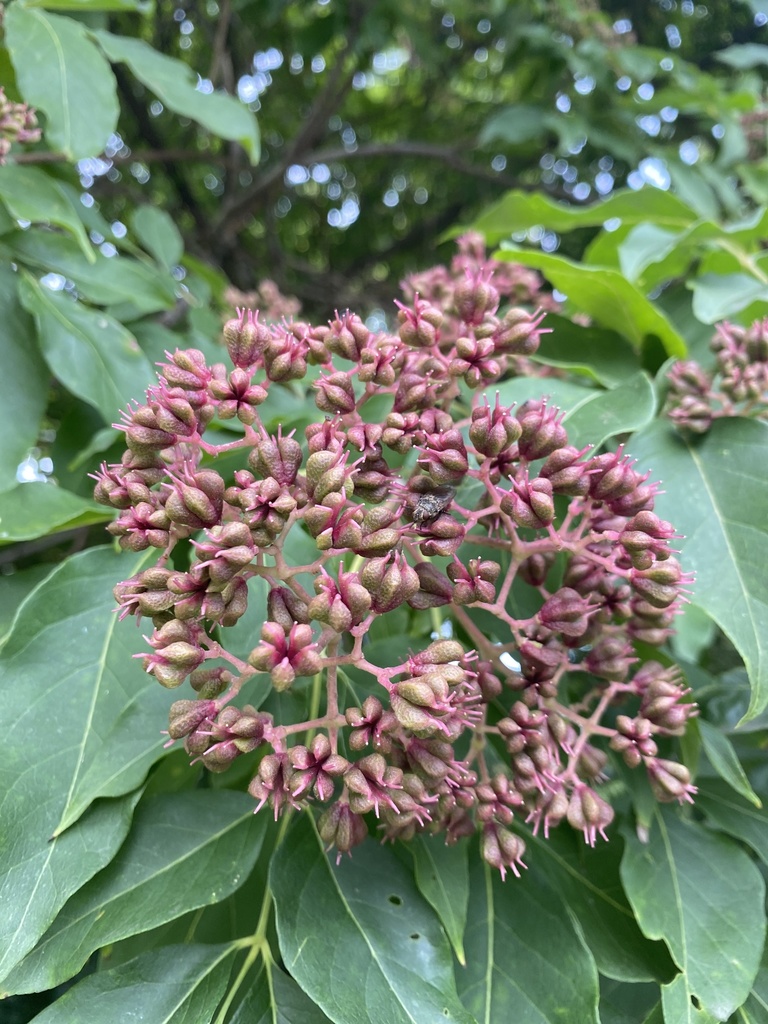
Quick facts
- Family: Rutaceae
- Difficulty: Easy to care for
- Watering: every 5 days
- Light: Full sun
- Temperature: 5–35 °C
- Toxicity: Toxic to pets
About Bee-bee tree
Tetradium daniellii, also known as the Bee Tree or Honey Tree, is a medium-sized deciduous tree valued for its large clusters of fragrant white flowers that attract bees and other pollinators in late summer. Its dark green foliage and smooth bark make it an attractive specimen for parks and large gardens, providing significant seasonal interest. It is ideal as an ornamental tree or as a nectar source for beekeepers.
Native range
East Asia (primarily China and Korea)
Care tips
This tree thrives in full sun to partial shade, requiring at least 6 hours of direct sunlight for optimal flowering. It prefers well-drained, fertile, slightly acidic to neutral soils; it is tolerant of a variety of soil conditions once established. Young trees need regular watering to establish, while mature trees are quite drought-tolerant. Avoid planting it in waterlogged locations, as it is susceptible to root rot.
How to save a dying Bee-bee tree
- Warning signs
- Yellowing or browning, wilting leaves and premature drop. Stunted growth or weak shoots.
- First aid
- Check soil drainage and moisture. Ensure full sun exposure. Fertilize moderately in spring.
- What kills it
- Overwatering causing root rot, or lack of direct sunlight and good drainage.
- Can it be saved?
- Yes, if roots are not fully damaged. Act quickly by correcting the environment.