Staghorn sumac (Rhus typhina)
Care, watering, light and tips for Staghorn sumac on Floravia.
Quick facts
- Family: Anacardiaceae
- Difficulty: Easy to care for
- Watering: every 7 days
- Light: Partial shade
- Temperature: 10–30 °C
- Toxicity: Toxic to pets
About Staghorn sumac
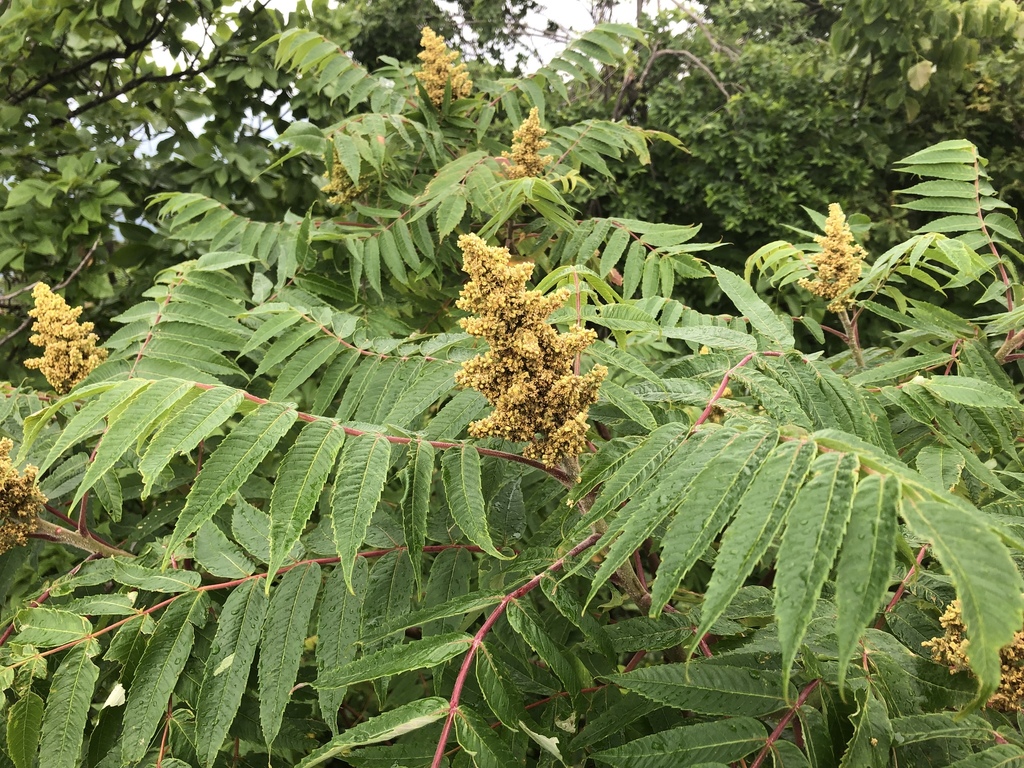
Rhus typhina, commonly known as staghorn sumac, is a deciduous shrub or small tree renowned for its spectacular autumn foliage that turns vivid shades of red, and its distinctive velvety, cone-shaped fruit clusters. Its open, branching habit, often with multiple trunks, makes it a striking focal point in naturalistic gardens, woodland edges, or as a standalone specimen. It is ideal for adding color and texture to temperate landscapes.
Native range
Eastern North America, from southeastern Canada to the northeastern United States.
Care tips
This sumac thrives in full sun to develop its best autumn color, though it tolerates partial shade. It is highly adaptable to various soil types, provided they are well-drained, including poor or dry soils. Once established, it is extremely drought-tolerant, so watering should be moderate and infrequent, avoiding waterlogging which can lead to root rot. A common mistake is planting it in confined spaces, as it tends to spread vigorously via suckers, thus requiring ample room to grow or regular management of its offshoots.
How to save a dying Staghorn sumac
- Warning signs
- Drooping, withered leaves, dry brown tips, stunted growth. May indicate drought or overwatering.
- First aid
- Check soil moisture; water if dry, improve drainage if waterlogged. Prune dead branches to stimulate.
- What kills it
- Constant waterlogging causing root rot or prolonged extreme drought. Also dense shade, it needs sun.
- Can it be saved?
- Generally yes, it's resilient. Act fast on watering or light issues. Recovery is slow but possible.