Sicilian sumac (Rhus coriaria)
Care, watering, light and tips for Sicilian sumac on Floravia.
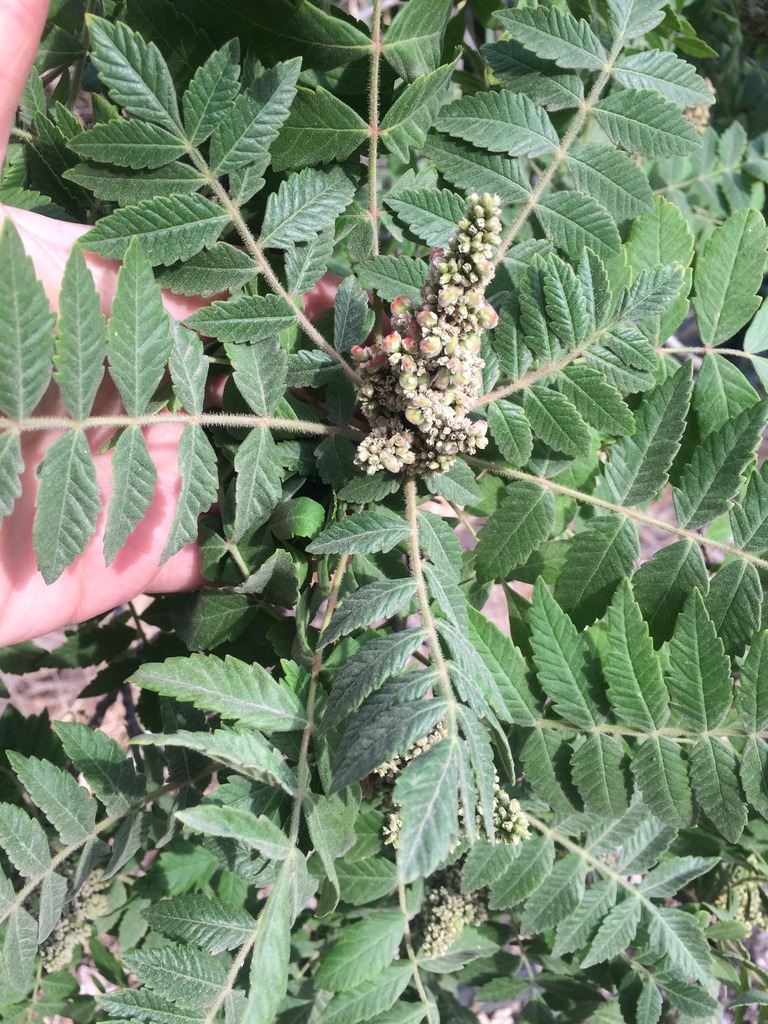
Quick facts
- Family: Anacardiaceae
- Difficulty: Easy to care for
- Watering: every 7 days
- Light: Partial shade
- Temperature: 10–30 °C
About Sicilian sumac
Rhus coriaria, commonly known as sumac or Sicilian sumac, is a deciduous shrub or small tree native to the Mediterranean region. It is characterized by its dark green pinnate leaves that turn reddish in autumn and its clusters of red fruits, highly valued in gastronomy. It is ideal for Mediterranean-style gardens, as a hedge, or as a standalone specimen.
Native range
Mediterranean region (Southern Europe, North Africa, and the Middle East).
Care tips
It prefers full sun exposure and well-drained soils, even poor or calcareous ones, showing great drought tolerance once established. Watering should be moderate, allowing the substrate to dry out between waterings, and it is important to avoid waterlogging, as it is susceptible to root rot. A common mistake is planting it in heavy, poorly drained soils, which compromises its health.
How to save a dying Sicilian sumac
- Warning signs
- Wilted or yellowing leaves, premature leaf drop, dry or brittle branches.
- First aid
- Check drainage, water if soil is dry. Protect young plants from intense sun. Prune dead branches.
- What kills it
- Excessive moisture or poor drainage leading to root rot. Prolonged exposure to severe frost.
- Can it be saved?
- Yes, if rot is not advanced or cold damage is not total. Act quickly with good drainage and pruning.