Peruvian peppertree (Schinus molle)
Care, watering, light and tips for Peruvian peppertree on Floravia.
Quick facts
- Family: Anacardiaceae
- Difficulty: Easy to care for
- Watering: every 7 days
- Light: Partial shade
- Temperature: 10–30 °C
- Toxicity: Toxic to pets
About Peruvian peppertree
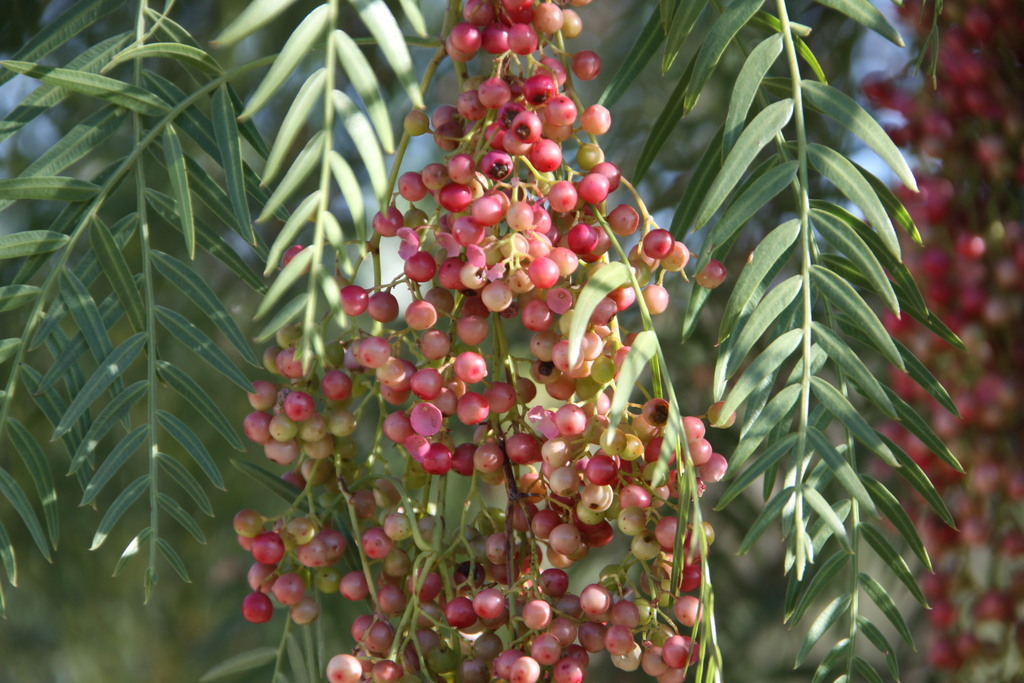
Schinus molle, commonly known as Peruvian Peppertree or False Pepper, is an evergreen tree native to the Peruvian Andes. It is characterized by its elegant weeping canopy, aromatic light green foliage, and clusters of small pink berries resembling peppercorns. It is ideal as an ornamental tree in large gardens, parks, or as a solitary specimen, adding a Mediterranean and exotic touch.
Native range
Andes of South America (Peru, Chile, Bolivia, Argentina)
Care tips
It prefers full sun exposure and tolerates drought well once established, requiring moderate and spaced waterings. It adapts to a wide variety of soils, as long as they have good drainage, with sandy or sandy-loam being optimal. A common mistake is overwatering in heavy soils, which can lead to root rot; it's better to underwater than overwater. It tolerades light frosts well, but prolonged ones can damage it.
How to save a dying Peruvian peppertree
- Warning signs
- Yellow falling leaves, dry brittle branches, no new shoots. General decline.
- First aid
- Check watering (dry or waterlogged soil), prune dead branches. Protect from frost if young. Ensure good drainage.
- What kills it
- Overwatering (root rot) or prolonged drought in young trees. Lack of direct sunlight.
- Can it be saved?
- Yes, it's a hardy species. Act quickly when signs appear, especially with watering and sun.