Peruvian peppertree (Schinus areira)
Care, watering, light and tips for Peruvian peppertree on Floravia.
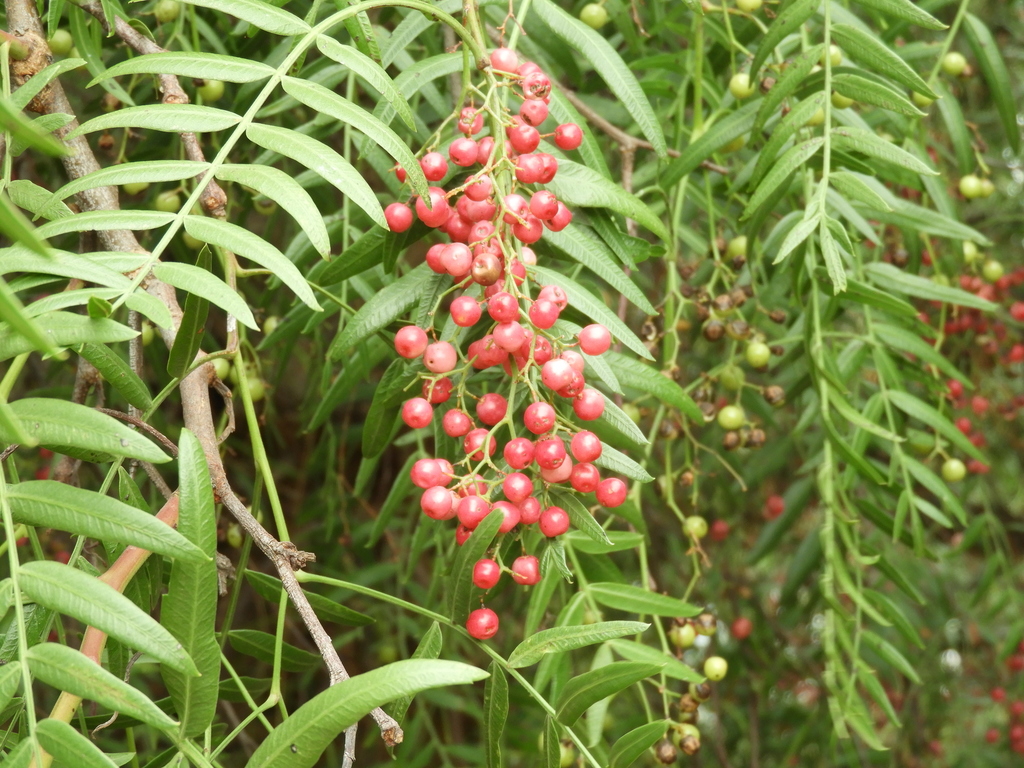
Quick facts
- Family: Anacardiaceae
- Difficulty: Easy to care for
- Watering: every 7 days
- Light: Partial shade
- Temperature: 10–30 °C
- Toxicity: Toxic to pets
About Peruvian peppertree
Schinus areira, also known as Peppertree or Peruvian Peppertree, is an evergreen tree native to South America, valued for its graceful weeping habit and rough bark. Its small reddish berries, though not true pepper, are used in some cultures as a spice. It's an ideal ornamental tree for large gardens or as a standalone specimen, adding an exotic and shady touch.
Native range
South America, specifically in the Andean regions of Peru, Bolivia, Chile, and Argentina.
Care tips
It requires full sun exposure and tolerates drought well once established, although moderate watering during dry periods promotes its development. It prefers well-drained soils, even poor or sandy ones, and is not demanding in terms of nutrients. A common mistake is excessive pruning, which can distort its natural shape; only formative pruning or removal of dead or damaged branches is recommended.
How to save a dying Peruvian peppertree
- Warning signs
- Yellowish or wilted leaves, premature leaf drop, dry or brittle branches.
- First aid
- Check watering (over or under), prune dead branches, protect from intense cold or prolonged drought.
- What kills it
- Constant waterlogging, severe frosts, or very compacted soils that prevent drainage.
- Can it be saved?
- Yes, if roots are not rotted and the main trunk is not irreversibly damaged.