American mistletoe (Phoradendron leucarpum)
Care, watering, light and tips for American mistletoe on Floravia.
Quick facts
- Family: Viscaceae
- Difficulty: Moderate care
- Watering: every 7 days
- Light: Partial shade
- Temperature: 10–30 °C
- Toxicity: Toxic to pets
About American mistletoe
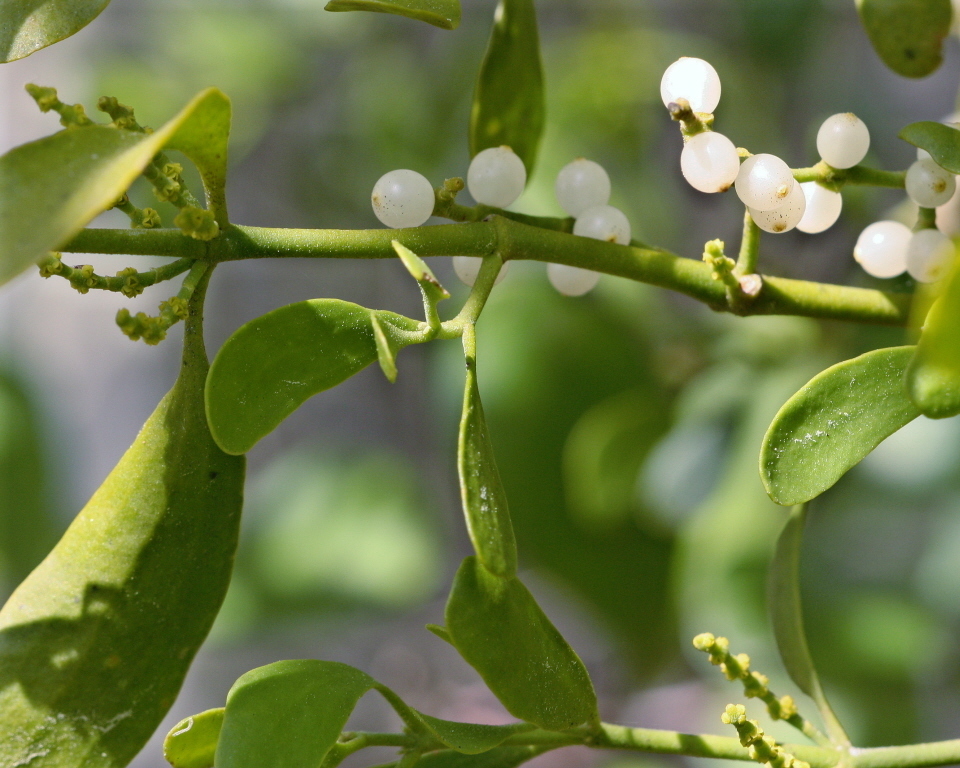
Phoradendron leucarpum, commonly known as Western Mistletoe, is a hemiparasitic plant that grows on various host tree species across North America. It features leathery, yellowish-green leaves and produces translucent white berries in winter. This plant is excellent for wildlife observation, as its berries provide a food source for birds.
Native range
Western North America, from southern British Columbia to northern Mexico
Care tips
As a hemiparasitic plant, Western Mistletoe is not cultivated as a traditional houseplant or garden plant, as it requires a host tree to survive. It does not need direct watering or fertilization; it obtains water and nutrients from its host. The primary 'care' involves ensuring it has a suitable host tree and preventing its overgrowth from harming the host.
How to save a dying American mistletoe
- Warning signs
- Wilting, yellowing, or blackening leaves; dried or prematurely fallen berries.
- First aid
- Ensure the host tree is healthy and not under water stress. If so, deep water the host tree.
- What kills it
- The host tree's death from drought or disease, as mistletoe depends on it.
- Can it be saved?
- Yes, if host stress is the cause and you act quickly. Check the main tree's health.