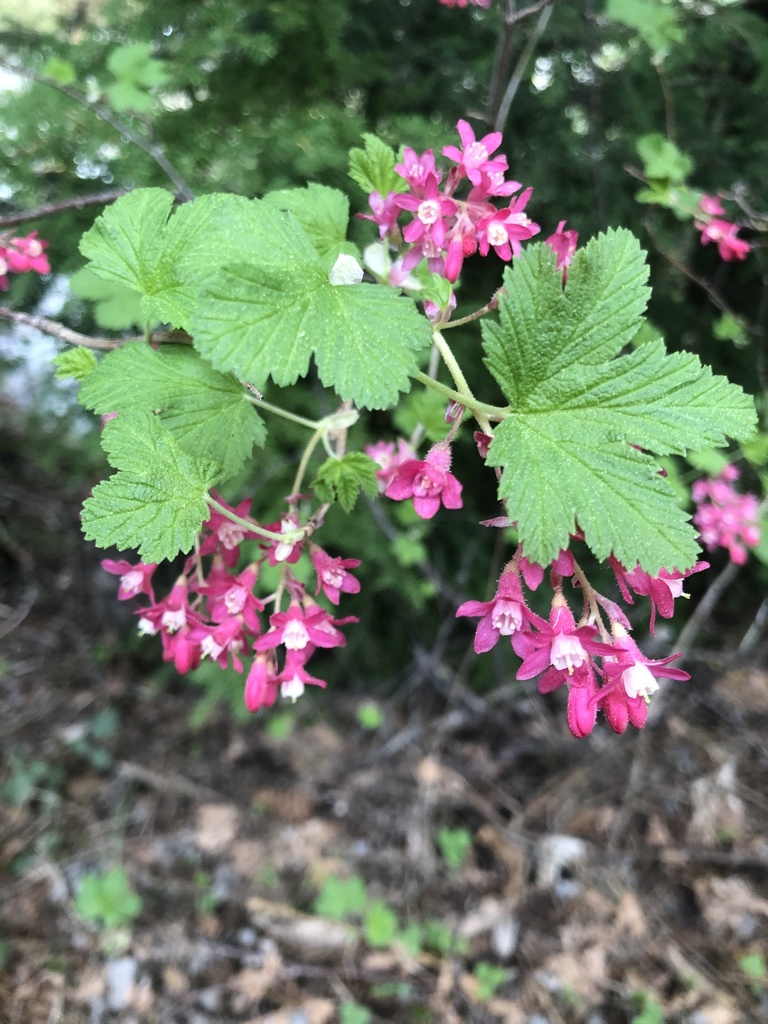
Flowering currant (Ribes sanguineum)
Care, watering, light and tips for Flowering currant on Floravia.
Quick facts
- Family: Grossulariaceae
- Difficulty: Easy to care for
- Watering: every 7 days
- Light: Partial shade
- Temperature: 10–30 °C
About Flowering currant
Ribes sanguineum, commonly known as flowering currant or bloody currant, is a deciduous shrub native to North America, valued for its clusters of pink to red flowers that emerge in early spring. Its lobed green foliage and dense habit make it ideal for hedges, borders, or as a standalone specimen in naturalistic gardens. It provides a vibrant burst of color when many other plants are still dormant.
Native range
Western North America, from British Columbia to California.
Care tips
It prefers full sun to partial shade, with well-drained soil rich in organic matter. Watering should be moderate, increasing during dry periods, but avoiding waterlogging as it is susceptible to root rot. It is crucial to prune after flowering to maintain its shape and encourage next year's blooms, avoiding severe pruning that might reduce flowering. A common mistake is planting it in heavy, poorly drained soils, which compromises its health.
How to save a dying Flowering currant
- Warning signs
- Yellowing or premature leaf drop, lack of flowering or wilted flowers, dry or brittle branches.
- First aid
- Check soil drainage and moisture; prune dead branches. Protect from intense direct sun if very weak.
- What kills it
- Overwatering (root rot) or prolonged drought in dry periods. Poor soil also weakens it.
- Can it be saved?
- Yes, it often recovers with adjustments in watering, soil, and pruning. Act quickly at the first signs.