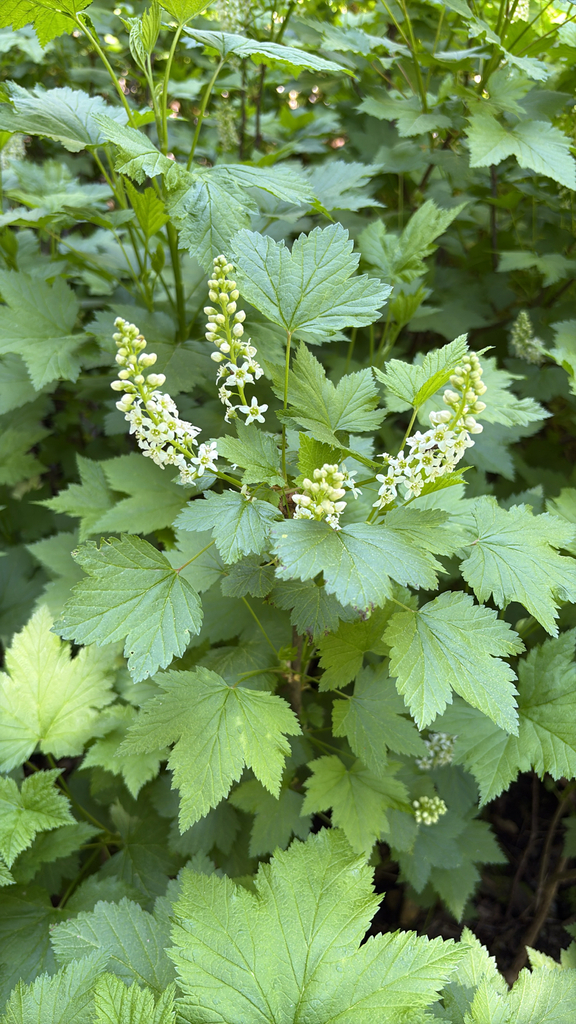
Northern blackcurrant (Ribes hudsonianum)
Care, watering, light and tips for Northern blackcurrant on Floravia.
Quick facts
- Family: Grossulariaceae
- Difficulty: Easy to care for
- Watering: every 5 days
- Light: Partial shade
- Temperature: 10–30 °C
About Northern blackcurrant
Ribes hudsonianum, commonly known as wild black currant, is a deciduous shrub native to North America. It is characterized by its bright green, lobed leaves and clusters of small, greenish flowers that develop into edible black berries. It is ideal for native gardens, edible hedges, or as an understory plant in shaded areas.
Native range
North America, from Alaska to northern California and eastern Quebec.
Care tips
This plant prefers partial to full shade, especially in warmer climates, to prevent heat stress. The soil should be rich in organic matter, well-draining, and consistently moist; it does not tolerate drought. Water regularly to maintain soil moisture, particularly during dry spells. Avoid heavy, clay soils which can lead to waterlogging and root rot.
How to save a dying Northern blackcurrant
- Warning signs
- Yellow or brown falling leaves, stunted growth, small or no fruits.
- First aid
- Check soil drainage and moisture; prune dry or diseased branches.
- What kills it
- Waterlogged or excessively dry soil; lack of indirect sunlight.
- Can it be saved?
- Yes, if you act quickly by correcting watering and location, and damage isn't total.