Common houseleek (Sempervivum tectorum)
Care, watering, light and tips for Common houseleek on Floravia.
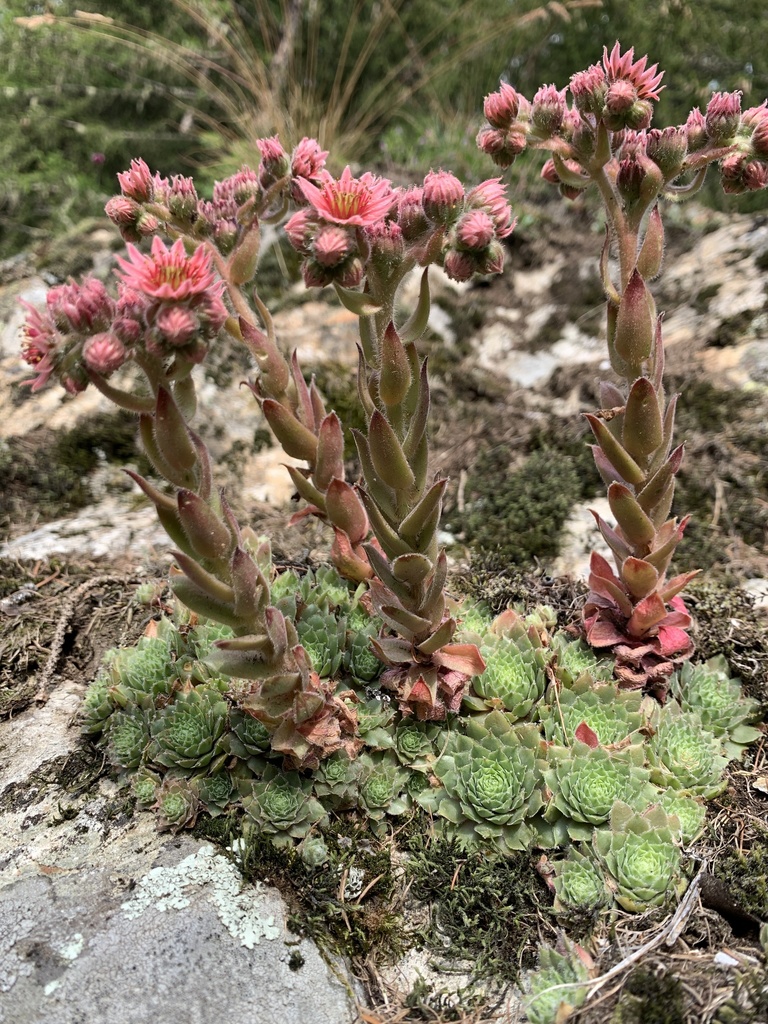
Quick facts
- Family: Crassulaceae
- Difficulty: Easy to care for
- Watering: every 14 days
- Light: Full sun
- Temperature: 5–35 °C
About Common houseleek
Sempervivum tectorum, commonly known as 'common houseleek' or 'roof houseleek', is a perennial succulent that forms compact rosettes of fleshy leaves, often with reddish tips. It's an ideal plant for rock gardens, green roofs, or pots, adding a rustic touch and exceptional resilience. Its rosettes readily propagate, creating an attractive plant mat.
Native range
Mountains of central and southern Europe
Care tips
It requires full sun to maintain its coloration and compact shape, although it toler tolerates some partial shade. Watering should be sparse, allowing the substrate to dry out completely between waterings, especially in winter. It needs a very well-drained, sandy, or succulent-specific substrate. A common mistake is overwatering, which can lead to rosette rot.
How to save a dying Common houseleek
- Warning signs
- Soft, wrinkled, and flaccid leaves (lack of water); yellowish or translucent leaves at the base (excess water); stem rot.
- First aid
- Check substrate. If dry, water moderately. If wet, stop watering and improve drainage. Move to a ventilated spot with indirect light.
- What kills it
- Overwatering is the main killer; also lack of light or a substrate that retains too much moisture, leading to rot.
- Can it be saved?
- Yes, if rot hasn't progressed far into the base or stem. Act quickly at the first signs.