Houseleek (Sempervivum calcareum)
Care, watering, light and tips for Houseleek on Floravia.
Quick facts
- Family: Crassulaceae
- Difficulty: Easy to care for
- Watering: every 14 days
- Light: Full sun
- Temperature: 5–35 °C
About Houseleek
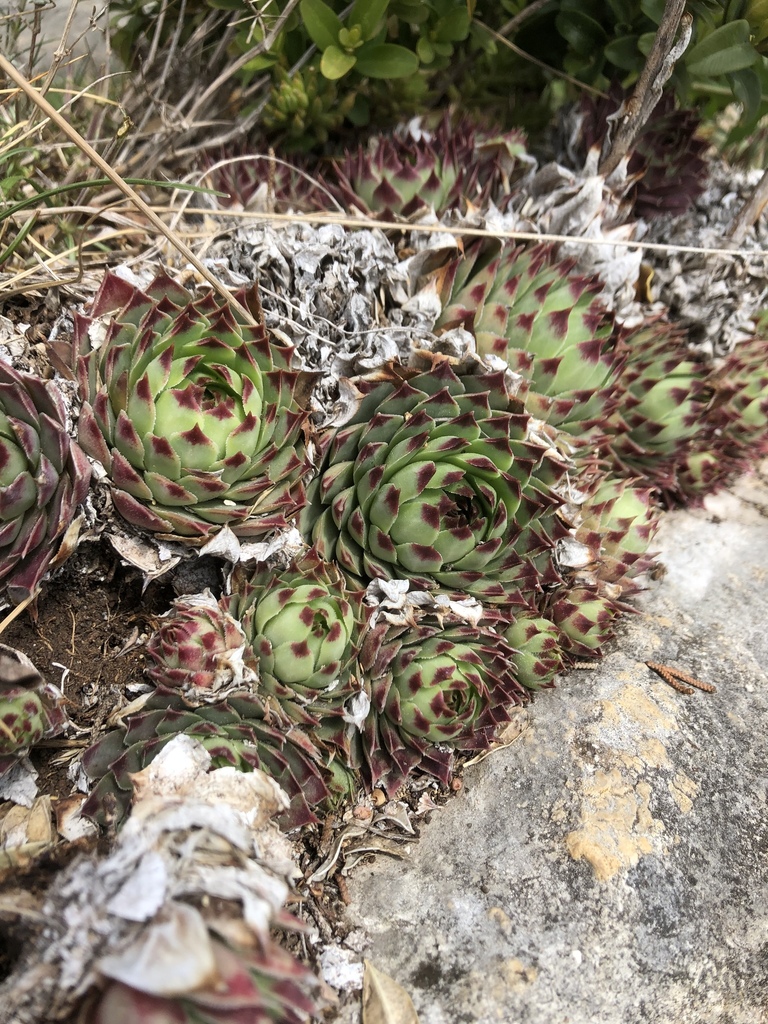
Sempervivum calcareum, commonly known as Joubarbe du calcaire, is a low-growing perennial succulent that forms tight rosettes. Its fleshy leaves range from green to reddish tips, especially with intense sun exposure. It is ideal for rockeries, green roofs, gravel gardens, and containers, where its hardiness and architectural beauty can be appreciated.
Native range
Mountains of central and southern Europe
Care tips
It requires full sun to develop its best coloration and compact form; insufficient light can cause the rosettes to stretch. Water only when the substrate is completely dry, as it is extremely sensitive to overwatering and root rot. Use a very well-draining, preferably sandy or mineral, succulent-specific substrate. A common mistake is overwatering or leaving it in heavy, moist soils, which will quickly lead to its decline.
How to save a dying Houseleek
- Warning signs
- Soft, wrinkled, or rotting leaves from base; black stem; etiolated (stretched) growth.
- First aid
- Remove dead/rotting leaves. Unpot, check roots. If rot, cut to healthy tissue. Let dry 1-2 days before repotting in dry substrate.
- What kills it
- Overwatering, especially in winter or low light. Also, substrate retaining too much moisture.
- Can it be saved?
- Yes, if rot hasn't reached the stem's core. An etiolated stem can be beheaded to re-root.