Moonstones (Pachyphytum oviferum)
Care, watering, light and tips for Moonstones on Floravia.
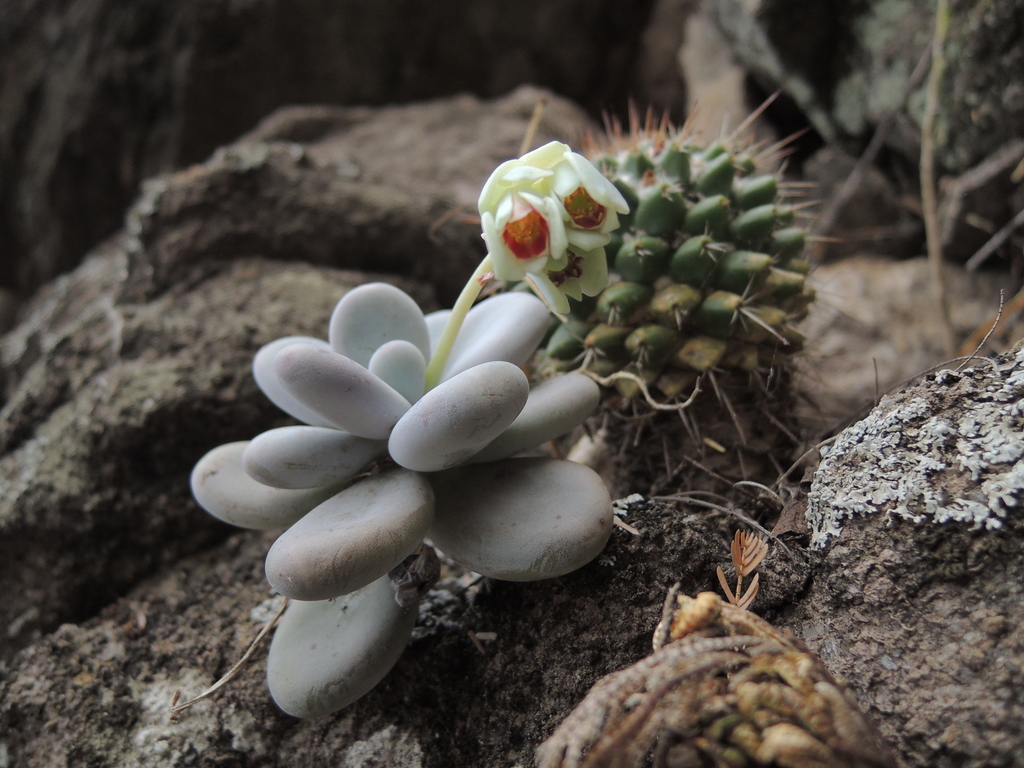
Quick facts
- Family: Crassulaceae
- Difficulty: Easy to care for
- Watering: every 15 days
- Light: Full sun
- Temperature: 5–35 °C
About Moonstones
Pachyphytum oviferum, commonly known as 'moonstone plant' or 'sugar almonds', is a succulent from the Crassulaceae family native to Mexico. Its leaves, a distinctive blue-grey to pinkish-mauve, are thick, oval, and covered with a whitish farina that gives them a frosted appearance. It is ideal for rock gardens, succulent gardens, individual pots, or as part of varied arrangements, adding a delicate and ethereal touch.
Native range
Mexico, in the state of San Luis Potosí
Care tips
It requires bright sunlight, preferably direct for several hours a day to maintain its compact coloration, although it tolerates some partial shade. Watering should be sparse and infrequent, allowing the substrate to dry out completely between waterings to prevent root rot; reduce even further in winter. Use a very well-draining substrate, specific for cacti and succulents. A common mistake is touching the leaves too much, as this can remove the protective farina, leaving marks and making the plant more susceptible to sunburn.
How to save a dying Moonstones
- Warning signs
- Soft, wrinkled, dull leaves, or yellowish and translucent.
- First aid
- Check soil. If dry, water moderately. If wet, stop watering and improve ventilation. Ensure bright, indirect light.
- What kills it
- Overwatering is the number one enemy; it quickly rots its delicate roots and stems. Also lack of light.
- Can it be saved?
- Yes! If the stem isn't completely rotted, you can try propagating healthy leaves or stem cuttings.