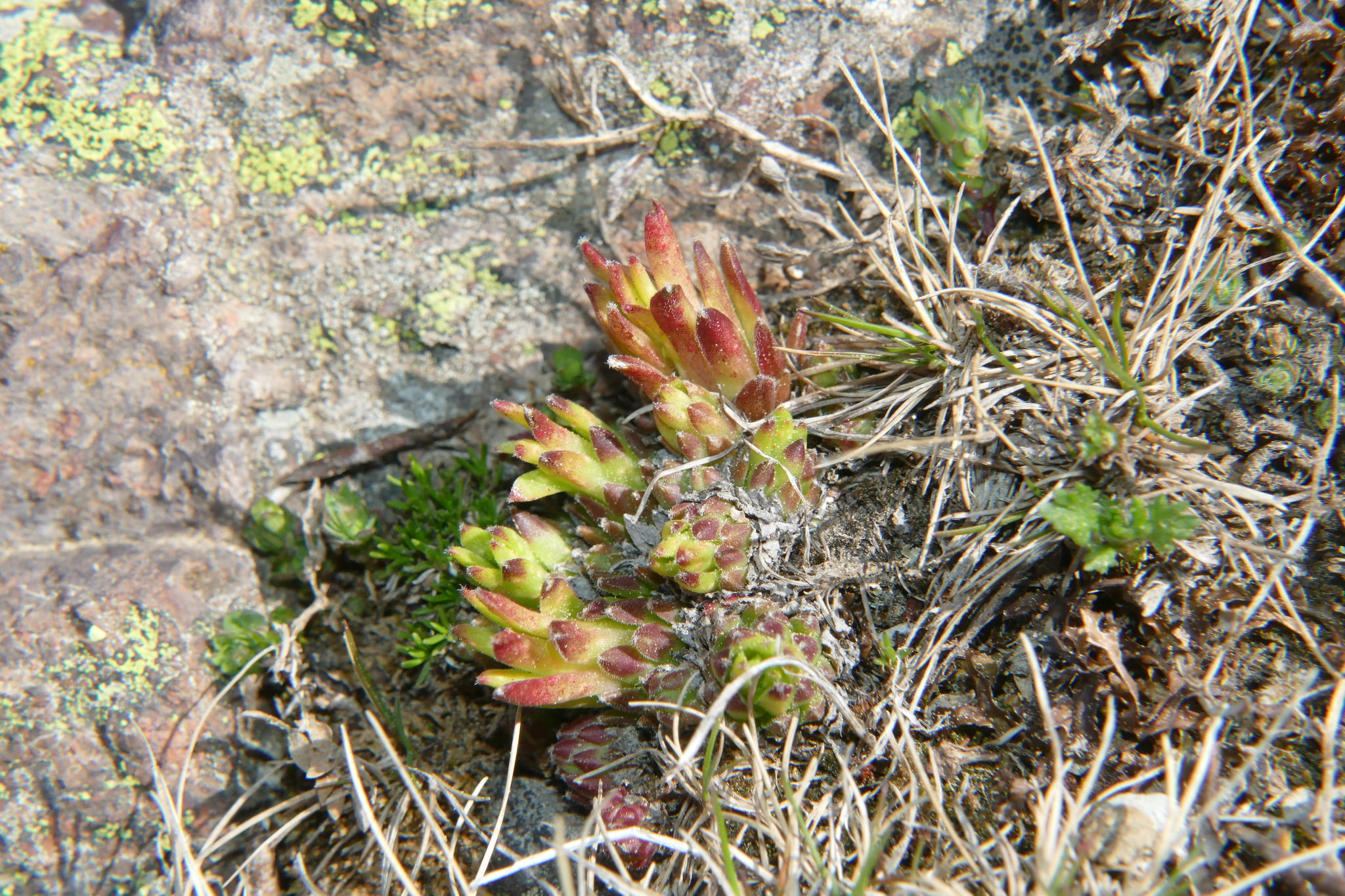
Hen and chicks (Sempervivum barbulatum)
Care, watering, light and tips for Hen and chicks on Floravia.
Quick facts
- Family: Crassulaceae
- Difficulty: Easy to care for
- Watering: every 14 days
- Light: Full sun
- Temperature: 5–35 °C
About Hen and chicks
Sempervivum barbulatum, also known as Bearded Houseleek, is a small perennial succulent from the Crassulaceae family, valued for its compact, fleshy rosettes that form dense mats. Its leaves, often tinged with reddish hues at the edges and featuring fine hairs, give it a distinctive appearance. It's ideal for rock gardens, green roofs, pots, and as ground cover in low-maintenance gardens, adding texture and color with its resilience to harsh conditions.
Native range
Central and Southern Europe, from the Pyrenees to the Balkans and the Caucasus
Care tips
It requires full sun to develop its most intense colors and maintain its compact shape, although it tolerates some partial shade in very hot climates. Watering should be sparse and infrequent, allowing the substrate to dry out completely between waterings, especially in winter. Use a very well-draining, sandy, or succulent-specific substrate to prevent waterlogging. A common mistake is overwatering, which can lead to rosette rot, its main enemy.
How to save a dying Hen and chicks
- Warning signs
- Soft, wrinkled, or translucent leaves (overwatering). Dry, crispy leaves or woody base (underwatering/sun).
- First aid
- Remove damaged leaves. Check roots. If rot, cut and repot in dry, well-draining substrate.
- What kills it
- Overwatering and poorly draining soil. Also, lack of direct sun.
- Can it be saved?
- Yes! They are very resilient. Act quickly with rot or severe dehydration.