Russian olive (Elaeagnus angustifolia)
Care, watering, light and tips for Russian olive on Floravia.
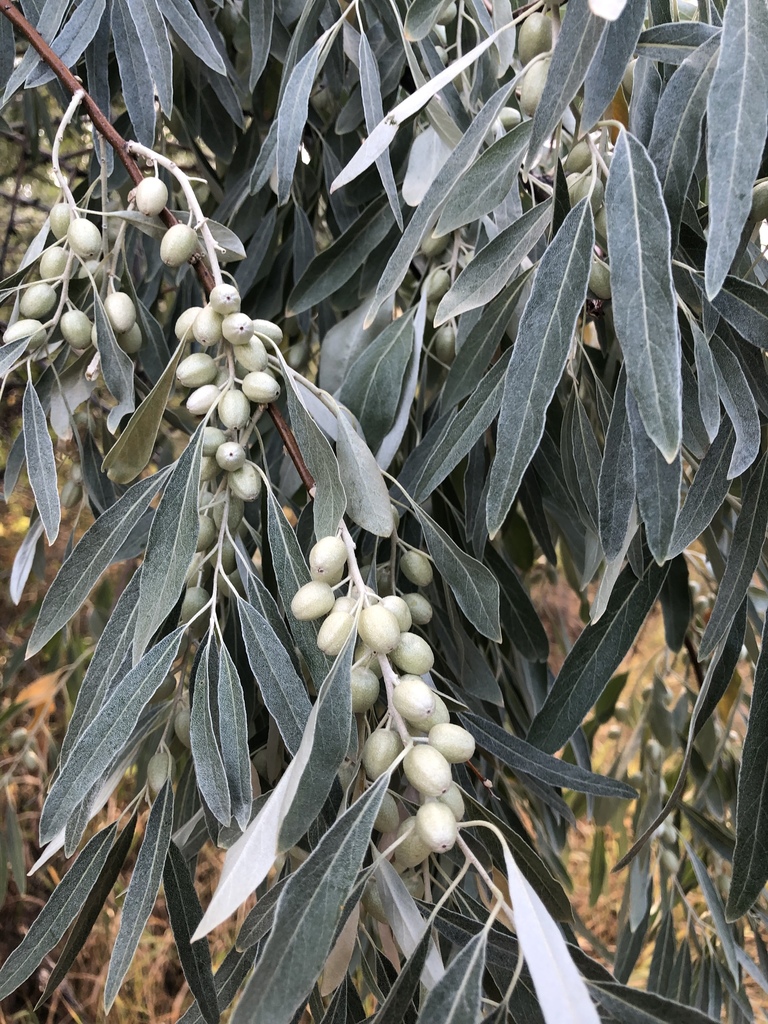
Quick facts
- Family: Elaeagnaceae
- Difficulty: Easy to care for
- Watering: every 10 days
- Light: Partial shade
- Temperature: 10–30 °C
About Russian olive
Elaeagnus angustifolia, commonly known as Russian Olive, is a deciduous or semi-deciduous shrub or small tree, valued for its silvery foliage and hardiness. Its narrow, silvery leaves give it an ethereal appearance, and its small, fragrant yellow flowers in spring are followed by small, edible fruits. It is ideal for hedges, windbreaks, or as an ornamental specimen in dry gardens and xeriscaping due to its tolerance for harsh conditions.
Native range
Western and Central Asia, from Southern Russia and Kazakhstan to Turkey and Iran
Care tips
It prefers full sun for best growth and foliage coloration, though it tolerates partial shade. It is extremely drought-tolerant once established, requiring occasional watering only during prolonged dry spells. It adapts to a wide range of soils, including poor and saline ones, as long as they have good drainage. Avoid overwatering, as it is prone to root rot in waterlogged soils.
How to save a dying Russian olive
- Warning signs
- Yellowish or silvery leaves falling, dry shoots, lack of vigor.
- First aid
- Check drainage and soil moisture. Prune dry branches. Ensure full sun exposure.
- What kills it
- Overwatering in heavy soils or complete lack of light. It's very drought-tolerant.
- Can it be saved?
- Yes, if you act quickly and correct the issue. It's a very hardy and adaptable species.