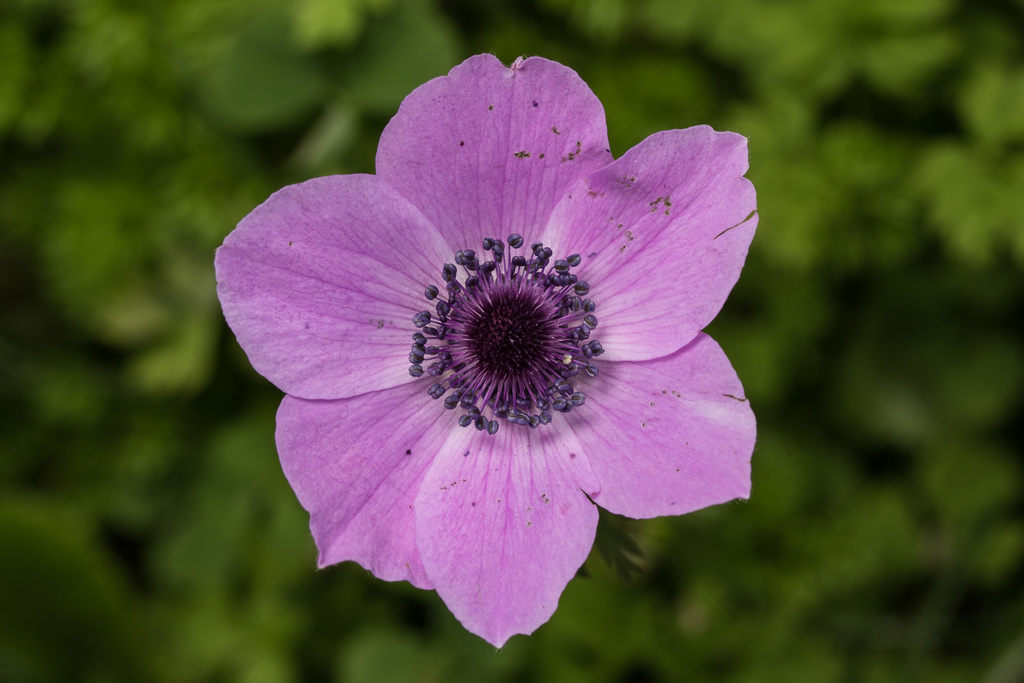
Poppy anemone (Anemone coronaria)
Care, watering, light and tips for Poppy anemone on Floravia.
Quick facts
- Family: Ranunculaceae
- Difficulty: Moderate care
- Watering: every 7 days
- Light: Partial shade
- Temperature: 10–30 °C
- Toxicity: Toxic to pets
About Poppy anemone
Anemone coronaria, also known as Poppy Anemone or Crown Anemone, is a perennial flower native to the Mediterranean region, cherished for its vibrant and colorful poppy-like blooms. Its silky petals, which can be white, red, blue, purple, or pink, often with a contrasting dark center, make it a spectacular choice for flower beds, borders, and cut flower arrangements. It brings a touch of spring cheer and elegance to any garden or vase.
Native range
Mediterranean region, from Southern Europe to North Africa and Southwest Asia.
Care tips
It requires full sun or light partial shade for optimal flowering, ideally with protection from intense afternoon sun in very hot climates. Watering should be moderate and regular during the growing season, keeping the substrate moist but never waterlogged; it is crucial to avoid overwatering to prevent tuber rot. It prefers well-drained soil, rich in organic matter, with a neutral to slightly alkaline pH. A common mistake is planting the tubers too late in autumn in cold areas, which can prevent their establishment before frost.
How to save a dying Poppy anemone
- Warning signs
- Yellowish or soft leaves, drooping stems, lack of flowering, or premature wilting flowers.
- First aid
- Check drainage and soil moisture. If waterlogged, remove and repot in dry substrate. If dry, water moderately.
- What kills it
- Overwatering and poor drainage quickly rot the tubers. Also, excessive heat and extreme dryness during flowering.
- Can it be saved?
- Yes, if you act quickly. If the tuber is not completely rotted, it can recover with a suitable environment.