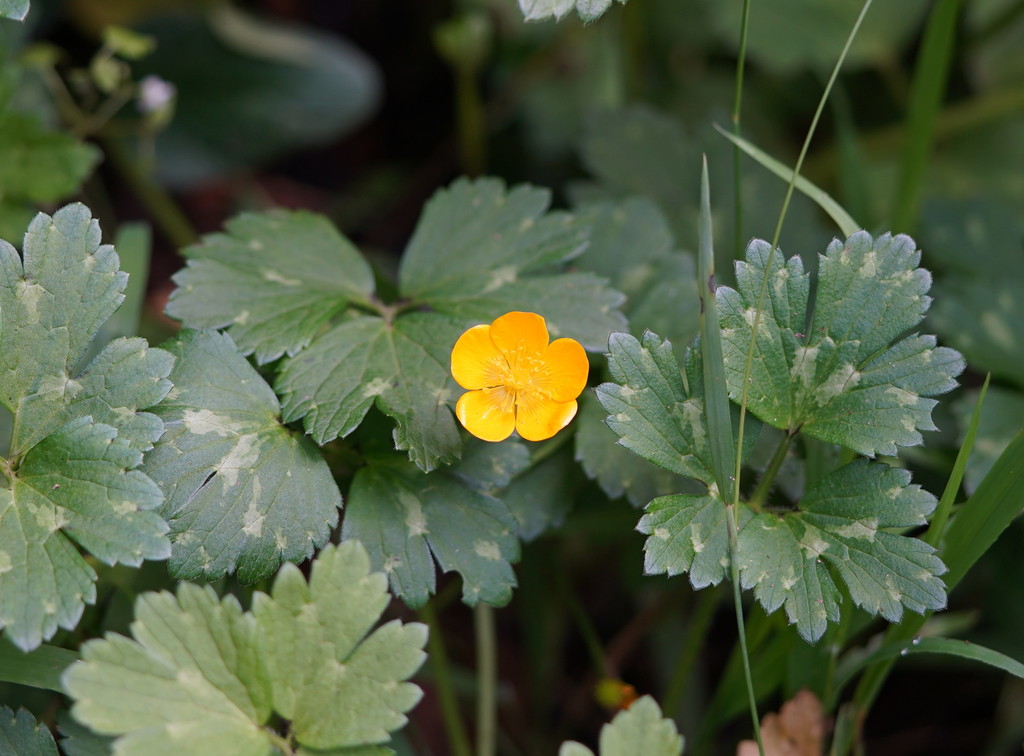
Creeping buttercup (Ranunculus repens)
Care, watering, light and tips for Creeping buttercup on Floravia.
Quick facts
- Family: Ranunculaceae
- Difficulty: Easy to care for
- Watering: every 7 days
- Light: Partial shade
- Temperature: 10–30 °C
- Toxicity: Toxic to pets
About Creeping buttercup
Ranunculus repens, commonly known as Creeping Buttercup, is a perennial, creeping herb belonging to the Ranunculaceae family, characterized by its glossy yellow flowers and deeply lobed leaves. It's an ornamental plant that spreads rapidly, ideal for ground cover in moist areas or to add a wild touch to cottage-style gardens. However, its vigorous growth can make it an invasive plant if not properly managed.
Native range
Europe and temperate Asia
Care tips
It prefers partial shade or full sun in cooler climates and consistently moist, well-drained soils. Watering should be regular to keep the substrate damp, especially during dry spells, as it is sensitive to drought. It is not demanding regarding soil, thriving in almost any type, although it prefers those rich in organic matter. A common mistake is underestimating its propagation capacity; it is crucial to control its growth to prevent it from invading other garden areas.
How to save a dying Creeping buttercup
- Warning signs
- Yellow or brown, wilted leaves, soft stems, poor or no flowering. Black spots if fungal.
- First aid
- Remove damaged leaves and stems. Check soil moisture and drainage. If potted, repot with fresh, well-draining soil.
- What kills it
- Overwatering and poor drainage, causing root rot. Also intense heat and direct sun in summer.
- Can it be saved?
- Yes, if you act fast. It's hardy, but root rot is lethal if not corrected promptly.