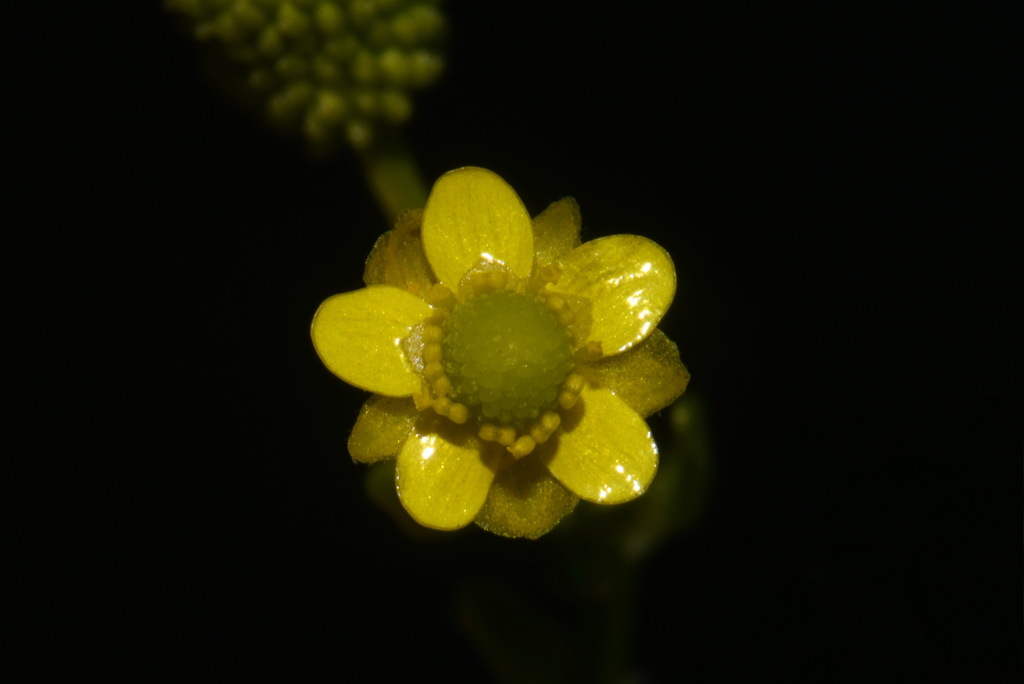
Celery-leaved buttercup (Ranunculus sceleratus)
Care, watering, light and tips for Celery-leaved buttercup on Floravia.
Quick facts
- Family: Ranunculaceae
- Difficulty: Demanding
- Watering: every 7 days
- Light: Partial shade
- Temperature: 10–30 °C
- Toxicity: Toxic to pets
About Celery-leaved buttercup
Ranunculus sceleratus, commonly known as cursed buttercup or celery-leaved buttercup, is an annual herbaceous plant found in wet and marshy environments. It is characterized by its small, bright yellow flowers and deeply lobed leaves, forming dense clumps. Although toxic, its presence can indicate the health of an aquatic ecosystem, and it may be of interest in wetland gardens or natural ponds for its bloom.
Native range
Europe, Asia, and North America
Care tips
It requires full sun to partial shade and consistently wet soils, or even submerged in shallow water. Watering must be constant to keep the substrate saturated; it's ideal for pond edges or areas with poor drainage. It prefers substrates rich in organic matter and clayey soils. A common mistake is attempting to grow it in dry or well-drained soils, which will lead to its rapid decline.
How to save a dying Celery-leaved buttercup
- Warning signs
- Wilting, yellowing or browning leaves, soft and blackened stems. Soft, dark roots.
- First aid
- Remove plant from pot, inspect roots. Cut off damaged parts. Replace substrate. Water with fungicide.
- What kills it
- Overwatering and waterlogged soil, causing rapid root rot. Insufficient light.
- Can it be saved?
- Yes, if rot is not too advanced and healthy roots remain. Act quickly.