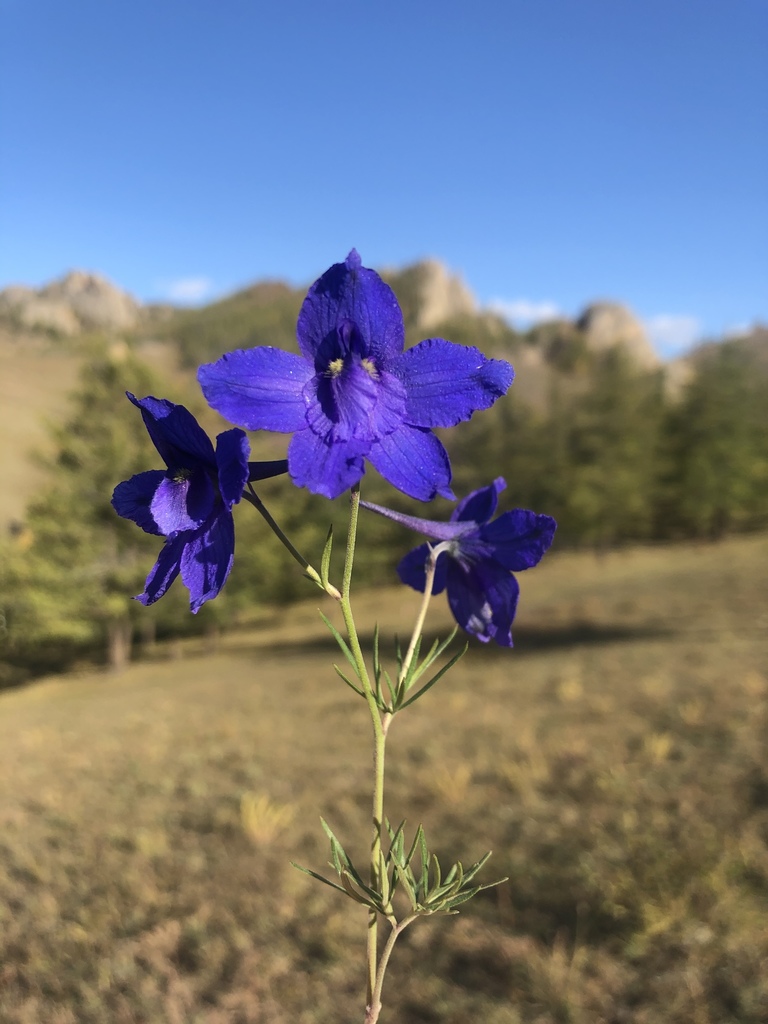
Siberian larkspur (Delphinium grandiflorum)
Care, watering, light and tips for Siberian larkspur on Floravia.
Quick facts
- Family: Ranunculaceae
- Difficulty: Moderate care
- Watering: every 3 days
- Light: Partial shade
- Temperature: 10–30 °C
- Toxicity: Toxic to pets
About Siberian larkspur
Delphinium grandiflorum, also known as dwarf Larkspur, is a charming perennial plant from the Ranunculaceae family, valued for its vibrant spikes of blue or purple flowers. With a more compact habit than other Delphinium species, it is ideal for the front of flower beds, borders, or in pots, adding a touch of intense color and verticality. Its delicate flowers, often with a white 'eye', attract pollinators and create a beautiful contrast in the garden.
Native range
East Asia, specifically Siberia and China
Care tips
It prefers full sun or light partial shade in very hot climates, with well-drained soil rich in organic matter. Keep the substrate consistently moist, but avoid waterlogging, especially during flowering periods. A common mistake is not providing good drainage, which can lead to root rot; ensure the soil does not retain too much water. It benefits from deadheading to encourage continuous blooming.
How to save a dying Siberian larkspur
- Warning signs
- Yellow or wilting leaves, soft and drooping stems, no blooms or deformed flowers. Black spots on leaves or stems.
- First aid
- Check drainage and soil moisture. Remove damaged leaves and stems with clean shears. Apply fungicide if black spots appear.
- What kills it
- Overwatering (root rot), heavy, poorly draining soil. Also lack of direct sun or extreme heat.
- Can it be saved?
- Yes, if you act quickly. Good drainage and moderate watering are key. If roots aren't too damaged, it will recover.