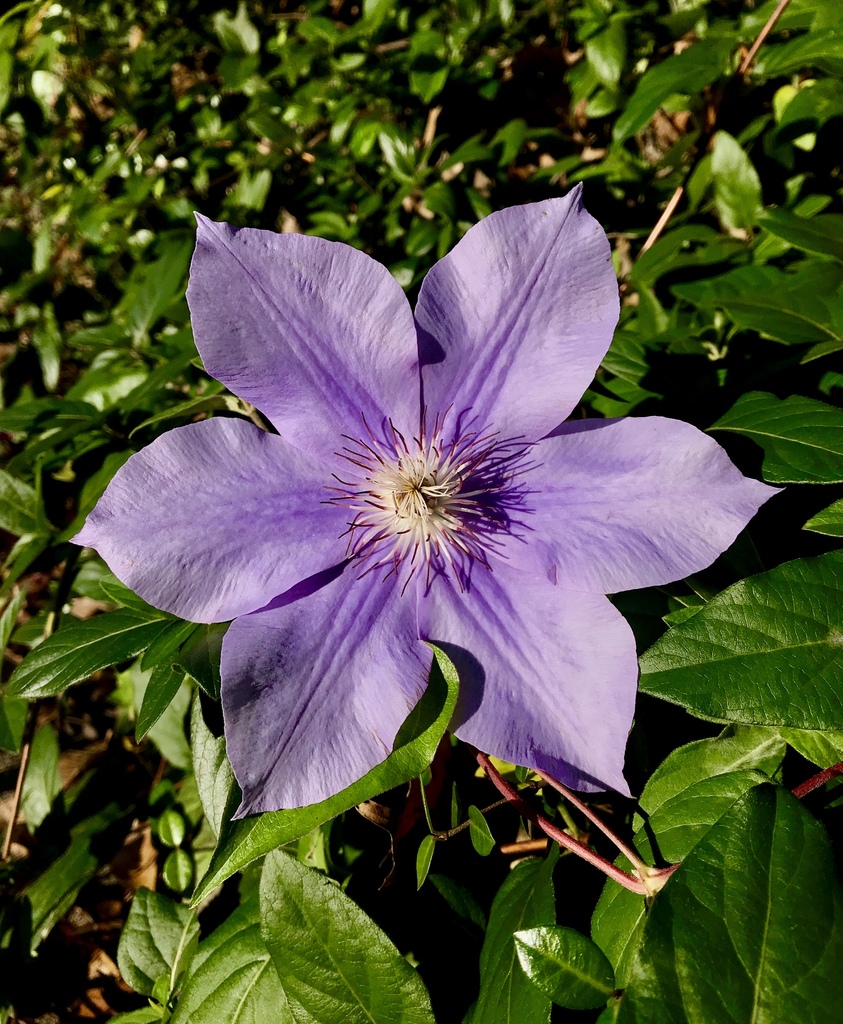
Woolly clematis (Clematis lanuginosa)
Care, watering, light and tips for Woolly clematis on Floravia.
Quick facts
- Family: Ranunculaceae
- Difficulty: Moderate care
- Watering: every 4 days
- Light: Partial shade
- Temperature: 10–30 °C
- Toxicity: Toxic to pets
About Woolly clematis
Clematis lanuginosa, commonly known as Woolly Clematis, is a vigorous, deciduous climbing plant renowned for its large, spectacular pure white or pale lavender flowers, which can reach 15-20 cm in diameter. Native to China, this species brings classic elegance to pergolas, trellises, and walls, covering them with a floral cascade from mid-summer to early autumn. It is ideal for creating a striking focal point in romantic or cottage-style gardens.
Native range
China
Care tips
It requires a location with at least six hours of direct sunlight per day for optimal flowering, although it appreciates the base of the plant being shaded and cool. Watering should be regular and deep, especially during flowering and dry periods, keeping the substrate consistently moist but well-drained. It prefers fertile, organic-rich, well-draining soils with a neutral to slightly alkaline pH. A common mistake is incorrect pruning: Clematis lanuginosa flowers on both new and old wood, so it benefits from a light prune in late winter, removing only weak or damaged branches.
How to save a dying Woolly clematis
- Warning signs
- Wilting, yellowing, or dark-spotted leaves; soft or dry stems; no blooms.
- First aid
- Check watering (moist but not soggy soil), prune damaged parts, ensure sun and support.
- What kills it
- Overwatering causing root rot, or lack of humidity in hot, dry climates. Also, lack of support.
- Can it be saved?
- Yes, if you act quickly and correct the cause. Clematis are resilient, give it a chance.