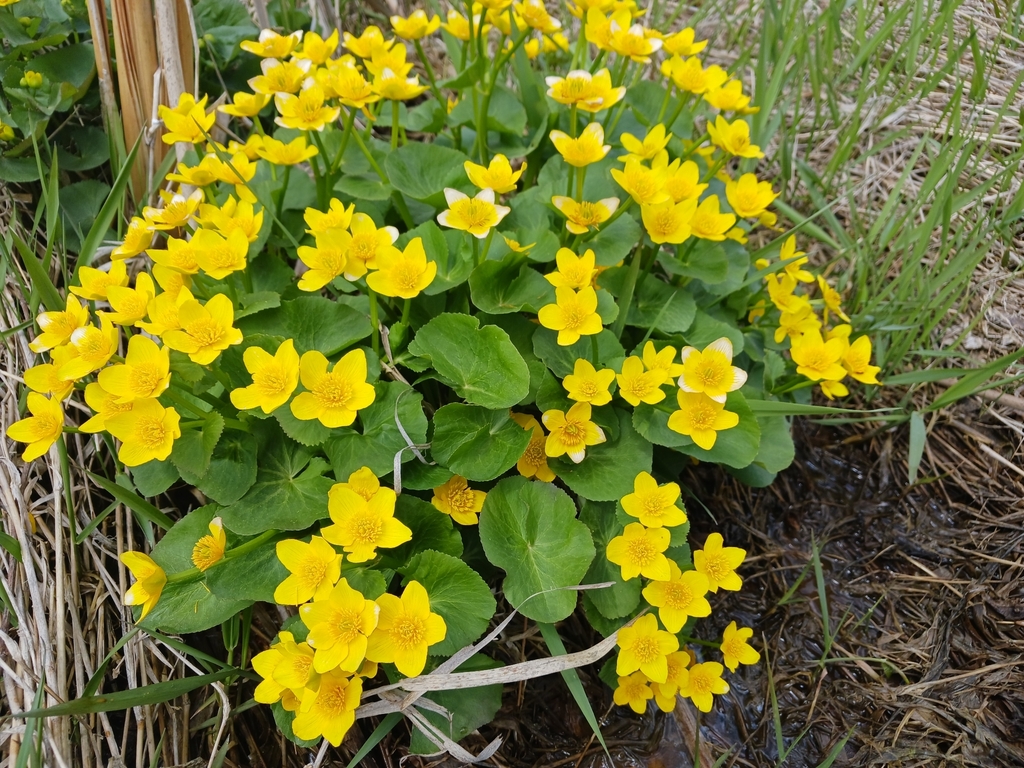
Marsh marigold (Caltha palustris)
Care, watering, light and tips for Marsh marigold on Floravia.
Quick facts
- Family: Ranunculaceae
- Difficulty: Easy to care for
- Watering: every 2 days
- Light: Partial shade
- Temperature: 10–30 °C
- Toxicity: Toxic to pets
About Marsh marigold
Caltha palustris, commonly known as marsh marigold, is a perennial herbaceous plant from the Ranunculaceae family, celebrated for its vivid yellow flowers that bloom in early spring. It forms dense clumps of glossy, kidney-shaped leaves, creating a vibrant display along pond edges, streams, or damp garden areas. It is ideal for water gardens and boggy zones, adding a natural splash of color.
Native range
Temperate and cold regions of the Northern Hemisphere, including Europe, Asia, and North America.
Care tips
This plant thrives in full sun to partial shade and consistently moist or even waterlogged soil, making it perfect for water edges or partially submerged pots. Watering should be abundant, ensuring the substrate never dries out completely, especially during flowering. It prefers rich, organic, and clayey soils. A common mistake is planting it in dry soil, which will lead to wilting and death.
How to save a dying Marsh marigold
- Warning signs
- Yellowish or brown, wilting leaves, soft stems, poor flowering. 🌿
- First aid
- Move to partial shade, ensure consistently moist but not waterlogged soil. Check drainage.
- What kills it
- Excessive soil dryness or strong full sun exposure. Does not tolerate dry soil.
- Can it be saved?
- Yes, if acted upon quickly. Requires moist and cool conditions to recover.