Bavarian monkshood (Aconitum bavaricum)
Care, watering, light and tips for Bavarian monkshood on Floravia.
Quick facts
- Family: Ranunculaceae
- Difficulty: Demanding
- Watering: every 7 days
- Light: Partial shade
- Temperature: 10–30 °C
- Toxicity: Toxic to pets
About Bavarian monkshood
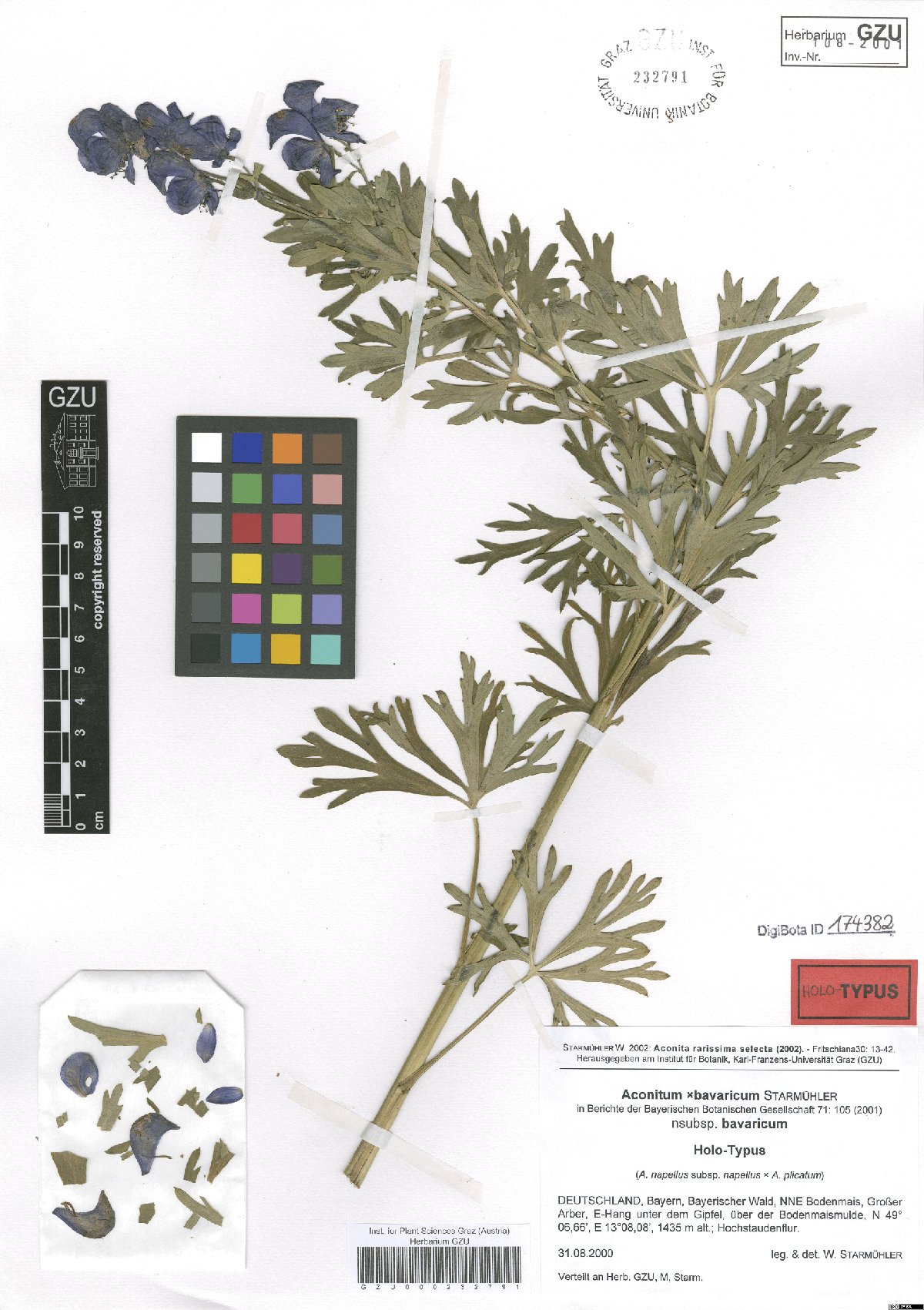
Aconitum bavaricum, also known as Bavarian Monkshood, is a herbaceous perennial plant belonging to the Ranunculaceae family, endemic to the mountainous regions of Bavaria and Austria. It is characterized by its intense violet-blue flowers, arranged in dense terminal spikes, which bloom in late summer and early autumn. Its elegant habit and striking blossoms make it ideal for partial shade borders in alpine or woodland gardens, adding a vibrant splash of color when many other plants have finished flowering.
Native range
Southeastern Germany and western Austria
Care tips
This plant thrives in partial shade or filtered light, as intense direct sun can scorch its leaves. It requires consistently moist but well-drained soil, rich in organic matter; avoid waterlogging, which can lead to root rot. It is crucial to remember that all parts of this plant are highly toxic if ingested, so it should be handled with gloves and kept out of reach of children and pets. A common mistake is planting it in dry soils or those with low organic matter, which will restrict its growth and flowering.
How to save a dying Bavarian monkshood
- Warning signs
- Wilted, yellowed or blackened leaves, soft stems, no flowering.
- First aid
- Move to partial shade, check soil moisture (avoid waterlogging), inspect drainage.
- What kills it
- Excessive direct sun and heat, constantly wet or waterlogged soil, poor drainage.
- Can it be saved?
- Yes, if addressed quickly. It's resilient if conditions are corrected.