Japanese monkshood (Aconitum japonicum)
Care, watering, light and tips for Japanese monkshood on Floravia.
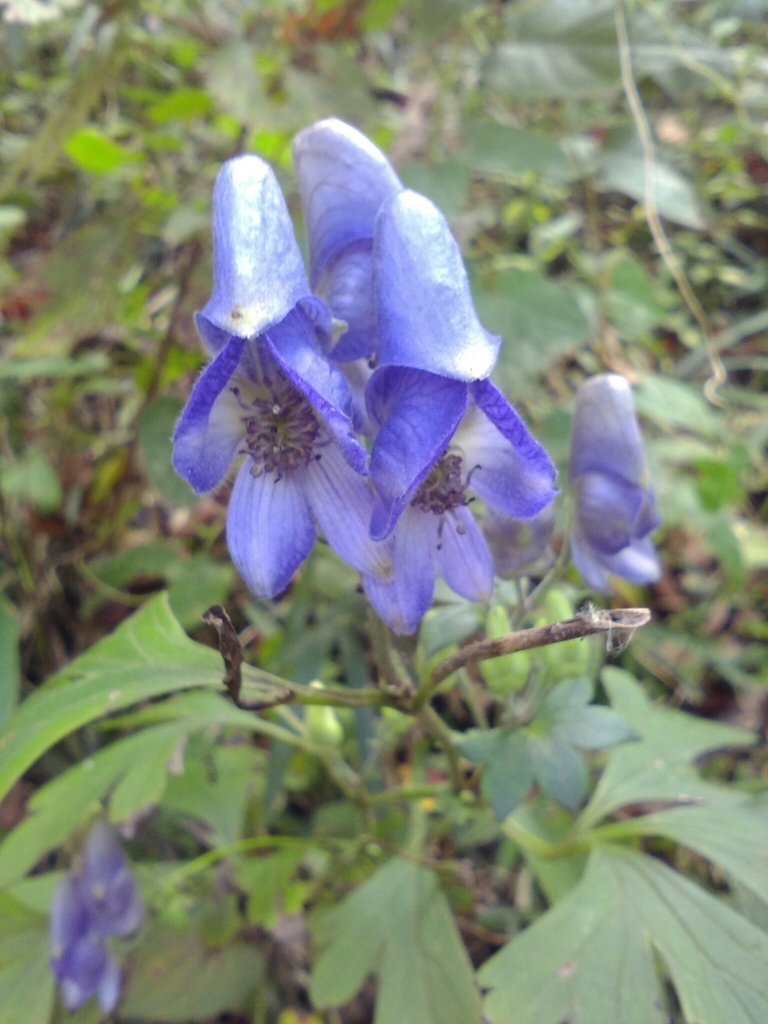
Quick facts
- Family: Ranunculaceae
- Difficulty: Demanding
- Watering: every 7 days
- Light: Partial shade
- Temperature: 10–30 °C
- Toxicity: Toxic to pets
About Japanese monkshood
Aconitum japonicum, commonly known as Japanese monkshood, is a herbaceous perennial from the Ranunculaceae family, valued for its striking blue or purple helmet-shaped flowers that bloom in clusters during autumn. It grows to a height of 60 to 120 cm and looks spectacular in shady borders or woodland gardens, providing a touch of intense color late in the season. It is crucial to remember that all parts of this plant are highly toxic if ingested.
Native range
Japan
Care tips
It prefers partial to full shade, especially in warmer climates, and moist, well-drained soil rich in organic matter. Keep the substrate consistently moist, but avoid waterlogging, as it is susceptible to root rot. A common mistake is handling the plant without gloves, which is dangerous due to its toxicity; always wear protection when planting or pruning. It does not require much fertilization, but a spring application of compost will benefit it.
How to save a dying Japanese monkshood
- Warning signs
- Yellow or wilting leaves, soft stems. May indicate overwatering or root rot.
- First aid
- Check drainage, reduce watering. If rot, remove damaged parts, repot.
- What kills it
- Constant waterlogging and heavy soil are lethal to its roots.
- Can it be saved?
- Yes, if you act quickly at the first signs of rot or wilting.