Austrian monkshood (Aconitum austriacum)
Care, watering, light and tips for Austrian monkshood on Floravia.
Quick facts
- Family: Ranunculaceae
- Difficulty: Demanding
- Watering: every 7 days
- Light: Partial shade
- Temperature: 10–30 °C
- Toxicity: Toxic to pets
About Austrian monkshood
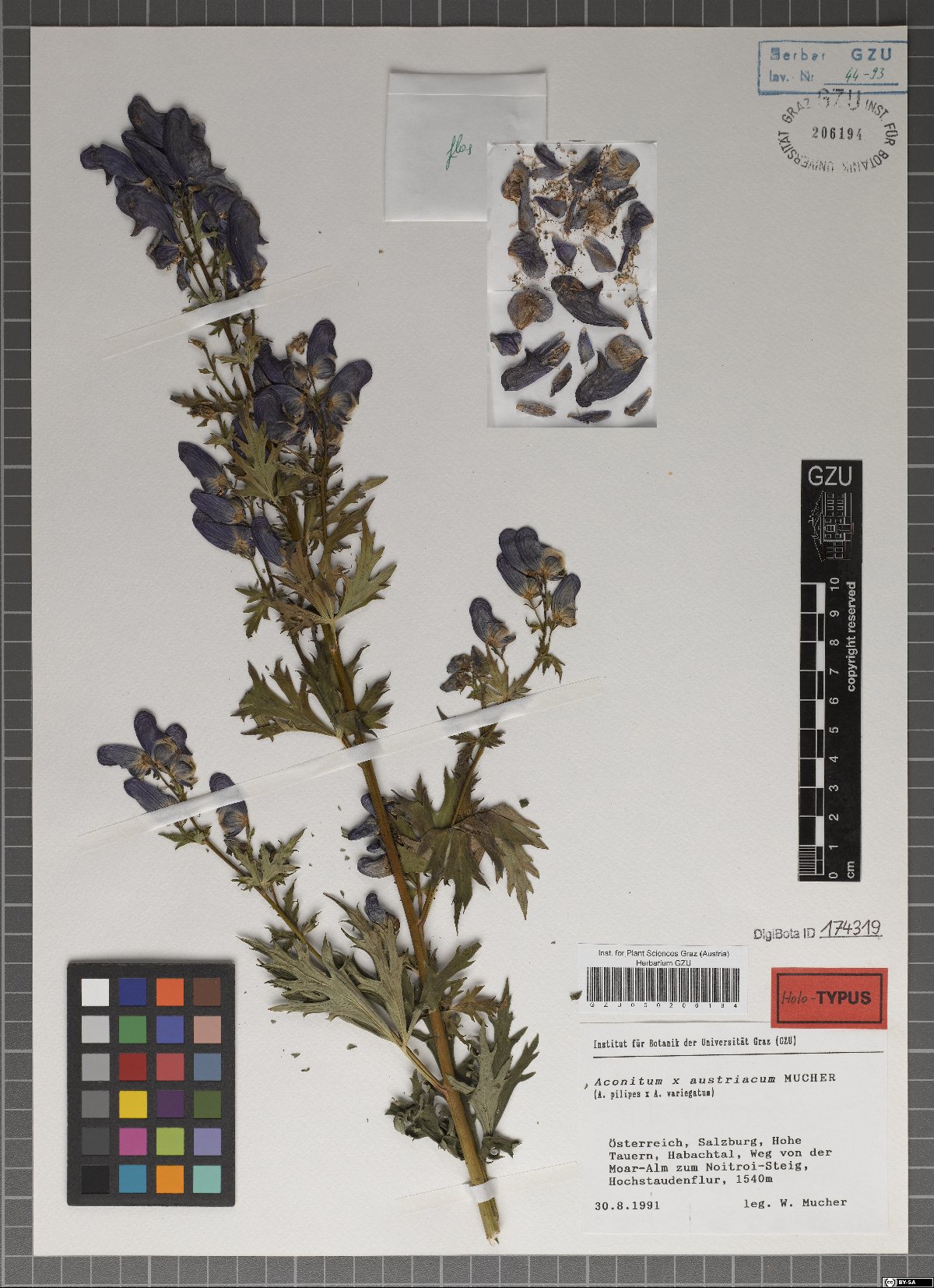
Aconitum austriacum, known as 'Austrian Monkshood', is a herbaceous perennial from the Ranunculaceae family, valued for its striking, intense blue-violet helmet-shaped flowers that bloom in summer. It reaches a height of 50 to 150 cm and makes a spectacular statement in shady borders, woodland gardens, or naturalistic settings. It is important to note that all parts of this plant are highly toxic, so it should be handled with caution and is not suitable for gardens with small children or pets.
Native range
Mountainous regions of Central and Eastern Europe
Care tips
It prefers locations with partial shade or filtered light, as direct sun can scorch its leaves. The ideal soil is moist, rich in organic matter, well-drained, and slightly acidic. Regular watering is required to keep the substrate consistently moist, especially during dry periods, but avoid waterlogging. A common mistake is planting it in poor or dry soils, which will limit its flowering and vigor.
How to save a dying Austrian monkshood
- Warning signs
- Yellowing/browning leaves, sudden wilting, soft stems. May indicate overwatering or root rot.
- First aid
- Remove plant from pot, inspect roots. Cut soft/rotted parts. Repot in fresh, well-draining soil. Reduce watering.
- What kills it
- Aconitum is sensitive to overwatering. Constantly wet soil suffocates roots and causes rot.
- Can it be saved?
- Yes, if rot hasn't affected most roots or main stem. Act quickly.