Lesser celandine (Ficaria verna)
Care, watering, light and tips for Lesser celandine on Floravia.
Quick facts
- Family: Ranunculaceae
- Difficulty: Easy to care for
- Watering: every 7 days
- Light: Partial shade
- Temperature: 10–30 °C
- Toxicity: Toxic to pets
About Lesser celandine
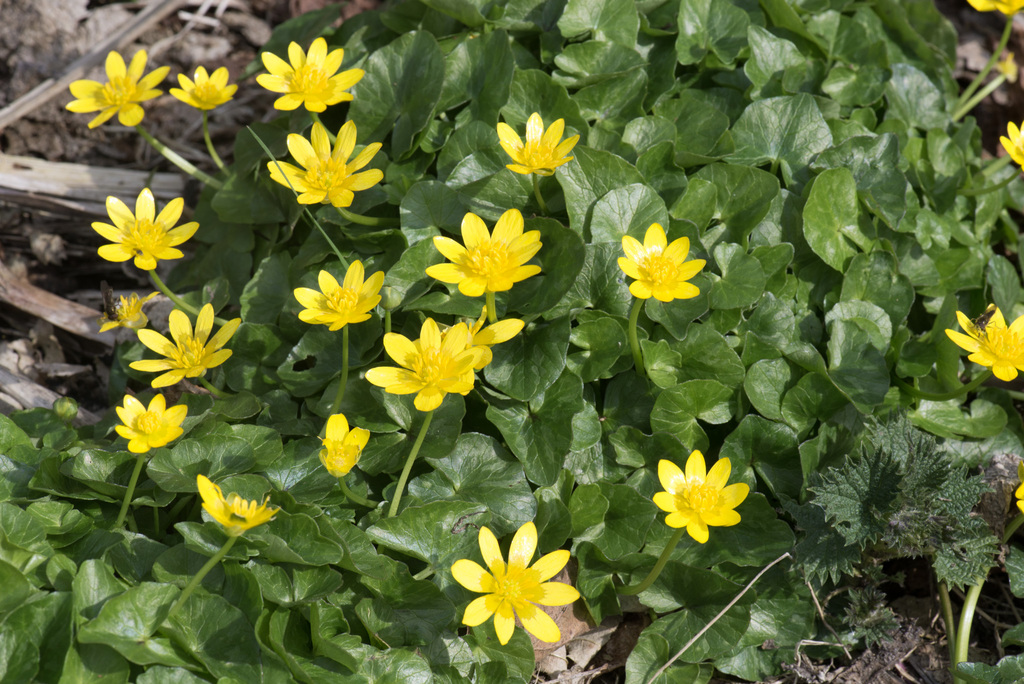
Ficaria verna, commonly known as lesser celandine or 'vårkål' in Swedish, is a charming small perennial plant that heralds the arrival of spring with its bright, star-shaped yellow flowers. It forms dense carpets of dark green foliage, often with purple markings, and is perfect for woodland gardens, under deciduous trees, or in rockeries where it can naturalize and provide an early floral display.
Native range
Europe and Western Asia
Care tips
This plant prefers partial to full shade, especially during warmer months, and moist but well-drained soil rich in organic matter. Watering should be regular during its active growth period in spring, but becomes unnecessary once the plant enters summer dormancy. Avoid overly disturbing its roots, as it can be sensitive to transplanting. A common mistake is planting it in locations with direct sun and dry soil, which can hinder its development and flowering.
How to save a dying Lesser celandine
- Warning signs
- Yellowing or wilting leaves prematurely, not at end of cycle. Spots on leaves or rot at the base.
- First aid
- Check drainage and soil moisture. If potted, repot into one with better drainage. Avoid excessive direct sun.
- What kills it
- Overwatering and poor drainage, leading to root rot. Also intense heat and prolonged drought.
- Can it be saved?
- Yes, if you act quickly. It's quite resilient. Remove damaged parts and adjust watering and exposure. 🌿