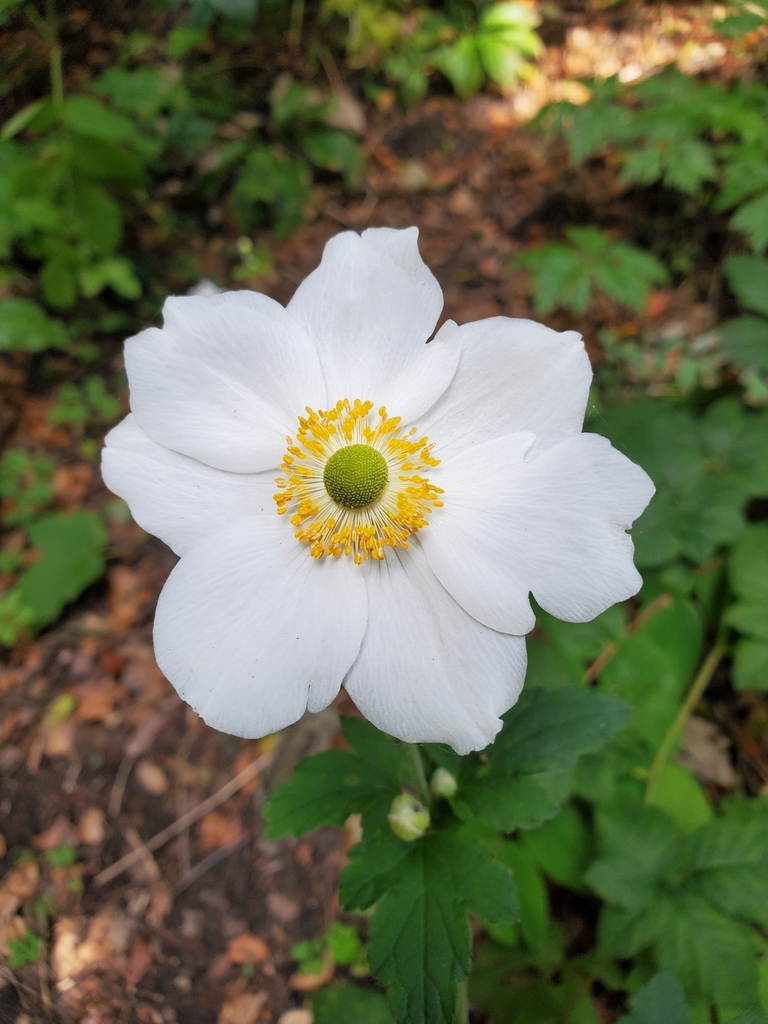
Japanese anemone (Eriocapitella hupehensis)
Care, watering, light and tips for Japanese anemone on Floravia.
Quick facts
- Family: Ranunculaceae
- Difficulty: Moderate care
- Watering: every 3 days
- Light: Partial shade
- Temperature: 10–30 °C
- Toxicity: Toxic to pets
About Japanese anemone
Eriocapitella hupehensis, commonly known as Hubei Anemone, is a herbaceous perennial that blooms in late summer and early autumn. Its delicate flowers, ranging from white to deep pink, rise on slender stems, creating an ethereal atmosphere and adding a touch of grace to shady gardens, woodland borders, or pots. It's ideal for providing color and texture when many other plants have already finished blooming.
Native range
Central China
Care tips
It prefers a location with partial shade or dappled shade, especially in warm climates, and a soil rich in organic matter, moist but well-drained. Keep the soil consistently moist, but avoid waterlogging to prevent root rot. A common mistake is planting it in full sun or dry soils, which can lead to poor growth and sparse flowering. Protect from strong winds.
How to save a dying Japanese anemone
- Warning signs
- Yellow or wilted leaves, soft stems. If dry, it wilts and leaves become crispy.
- First aid
- Check soil. If dry, water deeply. If waterlogged, repot into fresh, well-draining soil. Protect from intense direct sun and wind.
- What kills it
- Overwatering causing root rot or prolonged drought. Also direct midday sun in hot climates and heavy soils.
- Can it be saved?
- Yes, if roots aren't completely rotted or wilting isn't extreme. Act fast to adjust watering and location.