Silky oak (Grevillea robusta)
Care, watering, light and tips for Silky oak on Floravia.
Quick facts
- Family: Proteaceae
- Difficulty: Moderate care
- Watering: every 7 days
- Light: Partial shade
- Temperature: 10–30 °C
- Toxicity: Toxic to pets
About Silky oak
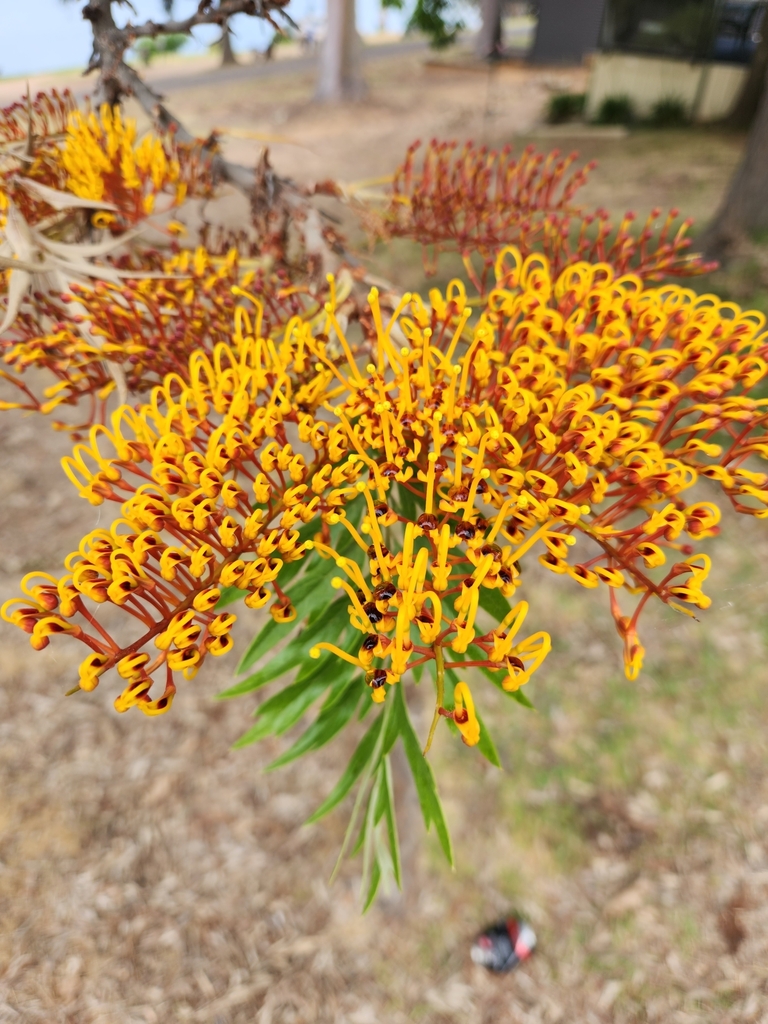
Grevillea robusta, also known as Silky Oak, is a majestic, fast-growing tree native to Australia, renowned for its finely divided, fern-like foliage and spectacular golden-orange, bottlebrush-shaped flowers. It can reach significant heights, making it an excellent shade tree or a striking specimen in large gardens and parks. Its fissured bark and elegant silhouette add great visual interest throughout the year.
Native range
Eastern Australia
Care tips
It prefers full sun for optimal flowering and vigorous growth, though it tolerates some partial shade. It is very drought-tolerant once established, requiring only occasional watering in dry climates; avoid waterlogging as it is susceptible to root rot. It thrives in well-drained, slightly acidic to neutral soils and does not require rich soils; in fact, excessive phosphorus can be detrimental. A common mistake is over-fertilization, especially with phosphorus-rich fertilizers, as Proteaceae are sensitive to this element.
How to save a dying Silky oak
- Warning signs
- Yellowing or browning leaves falling en masse; stunted growth; lack of flowering.
- First aid
- Check drainage and sun exposure (needs full sun). Adjust watering: soil should dry between waterings.
- What kills it
- Overwatering and heavy, waterlogged soils. Sensitive to lack of sunlight.
- Can it be saved?
- Yes, if you act quickly. Good drainage and correct placement are key to its recovery.