Rhubarb (Rheum rhaponticum)
Care, watering, light and tips for Rhubarb on Floravia.
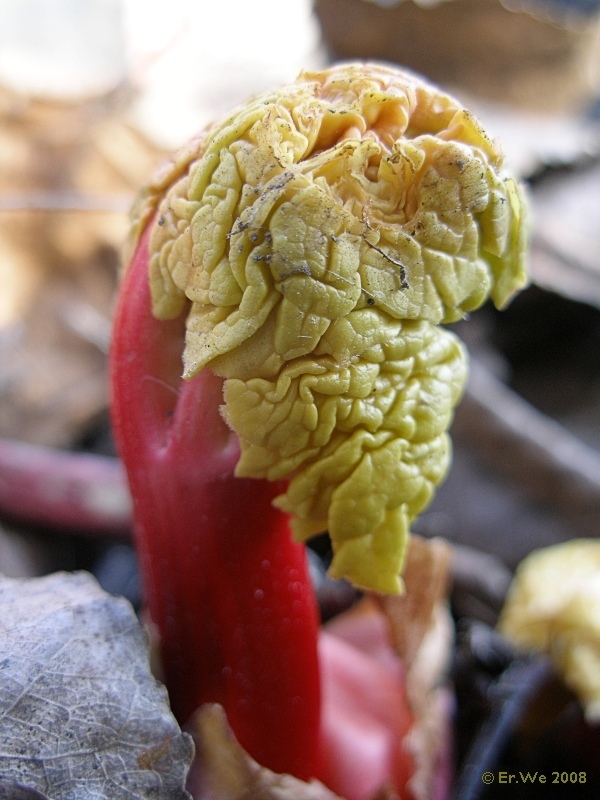
Quick facts
- Family: Polygonaceae
- Difficulty: Easy to care for
- Watering: every 3 days
- Light: Partial shade
- Temperature: 10–30 °C
- Toxicity: Toxic to pets
About Rhubarb
Rhubarb (Rheum rhaponticum), also known as munkrabarber, is a perennial plant belonging to the Polygonaceae family, valued for its edible stalks and ornamental foliage. It develops lush, vigorous growth with large leaves and reddish or green petioles, forming an imposing clump. It is ideal for vegetable gardens, garden borders, or as a focal plant in edible landscapes, providing dramatic texture and significant visual interest.
Native range
Eastern Europe and Asia, from the Volga region to eastern Siberia
Care tips
Rhubarb prefers full sun to light partial shade and deep, fertile, well-drained soil rich in organic matter. Keep the soil consistently moist, especially during dry periods, but avoid waterlogging as its roots are susceptible to rot. A common mistake is harvesting too early or pulling stalks instead of twisting and pulling them, which can damage the plant's crown.
How to save a dying Rhubarb
- Warning signs
- Soft, yellowing leaves or brown spots. Drooping, weak stems.
- First aid
- Check drainage and soil moisture. If waterlogged, remove plant and dry roots.
- What kills it
- Overwatering causing root rot or lack of winter chill.
- Can it be saved?
- Yes, if you act fast and there's no severe rot. Needs well-drained soil and cold.