Giant knotweed (Reynoutria sachalinensis)
Care, watering, light and tips for Giant knotweed on Floravia.
Quick facts
- Family: Polygonaceae
- Difficulty: Easy to care for
- Watering: every 7 days
- Light: Partial shade
- Temperature: 10–30 °C
- Toxicity: Toxic to pets
About Giant knotweed
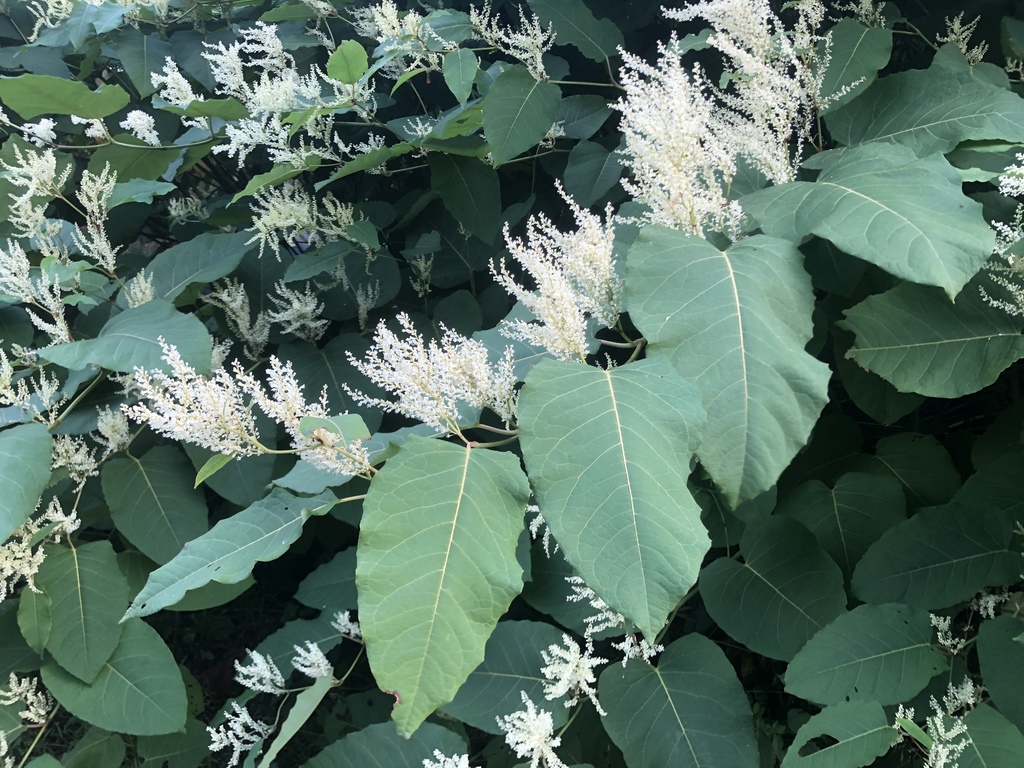
Reynoutria sachalinensis, also known as giant knotweed, is a fast-growing perennial herbaceous plant native to Northeast Asia. It is characterized by its hollow, reddish stems, large oval leaves up to 40 cm long, and dense inflorescences of small white or greenish flowers. Due to its imposing size and ability to form dense thickets, it is often used to create visual screens or as a background plant in large gardens, although it is important to control its spread.
Native range
East Asia (Japan, China, Korea, Sakhalin)
Care tips
It prefers full sun to partial shade exposure and adapts to a wide range of soils, although it thrives in moist, well-drained soil. Watering should be regular to keep the substrate moist, especially during dry periods, but avoid waterlogging. A common mistake is to underestimate its vigorous growth and spreading ability; it is crucial to prune it aggressively and consider physical barriers if you do not want it to colonize vast areas. It is not a plant for small gardens or without strict control.
How to save a dying Giant knotweed
- Warning signs
- Yellowish or wilted leaves, soft or blackened stems. May indicate overwatering or nutrient deficiency.
- First aid
- Check drainage. If potted, repot with good drainage. If in ground, improve soil aeration.
- What kills it
- Constant waterlogging suffocates roots. Lack of pruning can also weaken it by overgrowth.
- Can it be saved?
- Yes, it's very resilient. Identify and correct the root problem quickly. Pruning damaged stems aids recovery.