Japanese knotweed (Reynoutria japonica)
Care, watering, light and tips for Japanese knotweed on Floravia.
Quick facts
- Family: Polygonaceae
- Difficulty: Demanding
- Watering: every 7 days
- Light: Partial shade
- Temperature: 10–30 °C
- Toxicity: Toxic to pets
About Japanese knotweed
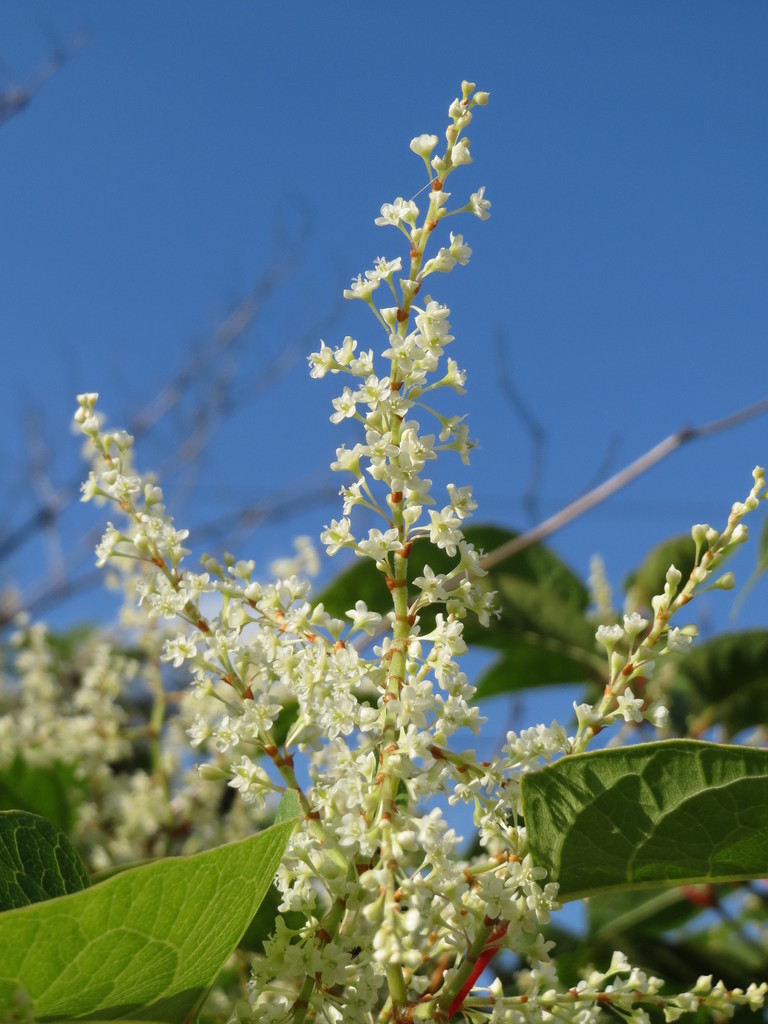
Reynoutria japonica, commonly known as Japanese knotweed, is a fast-growing herbaceous perennial plant, famous for its hollow stems reminiscent of bamboo and its large, heart-shaped green leaves. It is a highly vigorous invasive species, so its planting in gardens is not recommended, except in very controlled environments or large pots to contain its spread. Its presence is common along roadsides, riverbanks, and wasteland, where it forms dense thickets.
Native range
East Asia (Japan, China, Korea, and Taiwan)
Care tips
Given its invasive nature, the primary care for Reynoutria japonica focuses on containment or eradication, not ornamental cultivation. It is extremely adaptable to various light and soil conditions, although it prefers full sun to partial shade and moist but well-drained soils. Watering is not critical once established, as it tolerates drought well. The most common mistake is underestimating its spreading capacity; any rhizome fragment can generate a new plant, so its removal requires considerable and constant effort.
How to save a dying Japanese knotweed
- Warning signs
- Uncontrolled growth, invading other plants. Wilting or yellowing leaves without obvious cause, indicating environmental stress.
- First aid
- Aggressively cut stems and roots, including underground rhizomes. Dig up and remove every fragment. Do not compost.
- What kills it
- Trying to eradicate it with gentle methods or ignoring its invasive capacity. Leaving rhizome pieces in the soil.
- Can it be saved?
- In the sense of 'controlling its invasion,' yes, with continuous effort. As an ornamental plant, it's better to remove it.