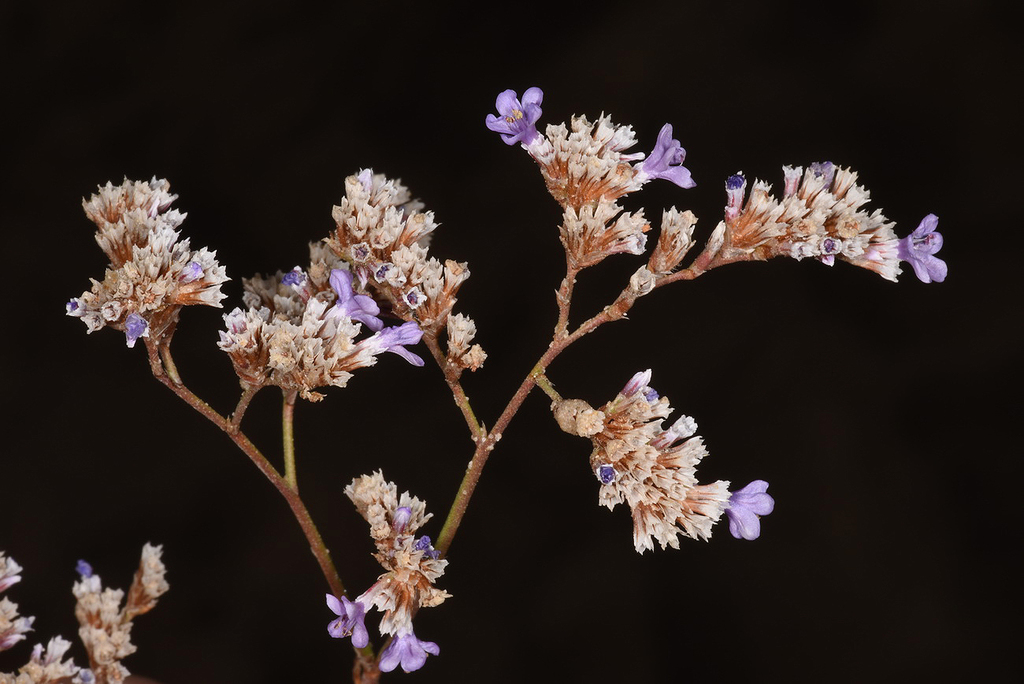
Sea lavender (Limonium narbonense)
Care, watering, light and tips for Sea lavender on Floravia.
Quick facts
- Family: Plumbaginaceae
- Difficulty: Easy to care for
- Watering: every 10 days
- Light: Partial shade
- Temperature: 10–30 °C
About Sea lavender
Limonium narbonense, commonly known as Narbonne Sea Lavender or Statice, is a perennial plant from the Plumbaginaceae family, prized for its delicate and long-lasting blue-violet flowers arranged in airy panicles. Its foliage is basal, forming a rosette of spatulate leaves. It's ideal for coastal gardens, rockeries, or as a cut flower in both dried and fresh arrangements, adding a touch of color and airiness.
Native range
Mediterranean region (southern Europe and northern Africa)
Care tips
It requires full sun for abundant flowering and well-drained soil, preferably sandy or stony, as it tolerates salinity and drought. Watering should be sparse once established, avoiding waterlogging which can rot the roots. This is a very hardy plant that doesn't need many nutrients; a common mistake is overwatering or overly fertile soil, which can reduce flowering. Deadheading spent flowers encourages a longer blooming period.
How to save a dying Sea lavender
- Warning signs
- Wilted, yellowing or spotted leaves, lack of flowering, soft and blackened stems. Soft, dark roots.
- First aid
- Remove affected parts. If overwatered, repot in dry, well-draining soil. If dry, water gradually.
- What kills it
- Overwatering and poor drainage, which rots the roots. Also extreme cold and prolonged frosts.
- Can it be saved?
- Yes, if rot is not too advanced or if drought hasn't permanently damaged roots. Act quickly.