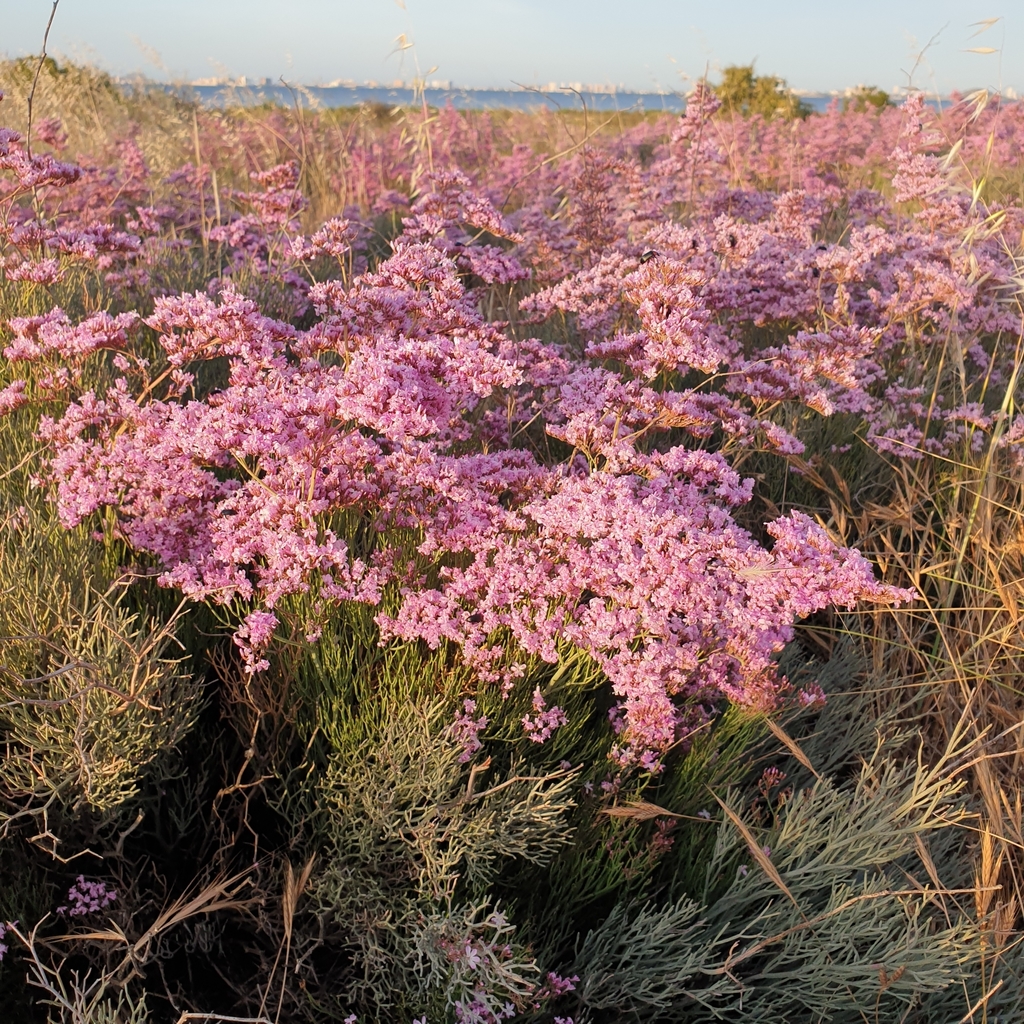
Sea lavender (Limonium caesium)
Care, watering, light and tips for Sea lavender on Floravia.
Quick facts
- Family: Plumbaginaceae
- Difficulty: Moderate care
- Watering: every 7 days
- Light: Partial shade
- Temperature: 10–30 °C
About Sea lavender
Limonium caesium, commonly known as Sea Lavender, is a perennial plant from the Plumbaginaceae family, native to Mediterranean coasts. It stands out for its delicate and abundant bluish-lilac flowers, arranged in airy panicles that seem to float. It is ideal for rockeries, coastal gardens, or as an accent plant in pots, adding a wild and elegant touch.
Native range
Iberian Peninsula (Spain and Portugal)
Care tips
It requires full sun for optimal flowering and prefers well-drained soils, even sandy or slightly saline, tolerating drought once established. Watering should be moderate, allowing the substrate to dry out completely between waterings, especially in winter. Avoid excessive moisture at the roots, as it can lead to rot; it is a plant that thrives in arid conditions and is very resistant to wind and salinity.
How to save a dying Sea lavender
- Warning signs
- Soft, yellowing or brown leaves. Drooping or rotting stems. Lack of flowering or wilted flowers.
- First aid
- Remove damaged leaves and stems. Check substrate moisture. Ensure good ventilation and indirect light.
- What kills it
- Overwatering causing root rot. Lack of drainage. Excessive shade or intense direct sun without acclimatization.
- Can it be saved?
- Yes, if roots are not completely rotted and the stem base is still firm. Act quickly.