Sea lavender (Limonium racemosum)
Care, watering, light and tips for Sea lavender on Floravia.
Quick facts
- Family: Plumbaginaceae
- Difficulty: Easy to care for
- Watering: every 7 days
- Light: Partial shade
- Temperature: 10–30 °C
About Sea lavender
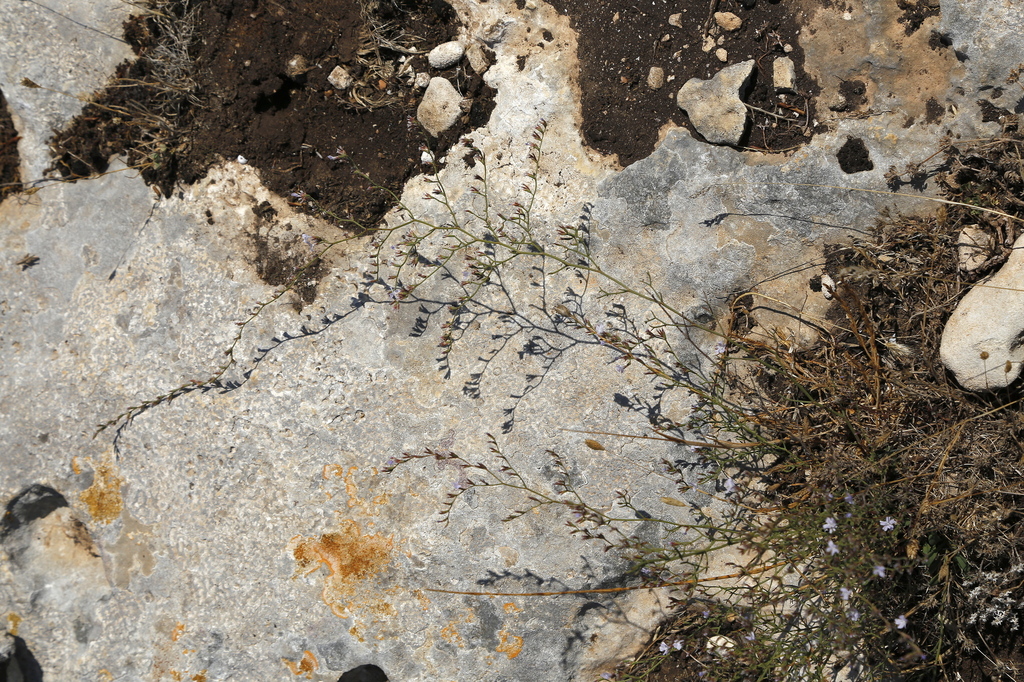
Limonium racemosum, commonly known as Racemose Sea Lavender, is a low-growing, spreading perennial plant, valued for its delicate and abundant white or pale pink flowers, arranged in terminal spikes. Its leaves are lanceolate and greyish-green, forming a basal rosette. It is ideal for rockeries, path borders, or as a groundcover in coastal gardens, providing a fine texture and an ethereal touch.
Native range
North Africa and Southwest Europe
Care tips
It requires full sun for optimal flowering and prefers well-drained soils, even sandy or rocky ones, tolerating salinity. Watering should be moderate, allowing the substrate to dry out between waterings, as it is susceptible to waterlogging. Avoid excessive fertilization, as this can reduce flowering and promote excessive leaf growth. A common mistake is planting it in heavy, poorly drained soils, which leads to root rot.
How to save a dying Sea lavender
- Warning signs
- Wilted, yellowing or spotted leaves, scarce or no flowering, soft stems. 🌿
- First aid
- Check drainage and soil moisture. Prune damaged parts and ensure it gets enough direct sunlight. ☀️
- What kills it
- Overwatering (especially in winter) or lack of light. It doesn't tolerate waterlogging. 💧
- Can it be saved?
- Yes, if you act quickly. It's quite resilient if conditions are corrected in time.