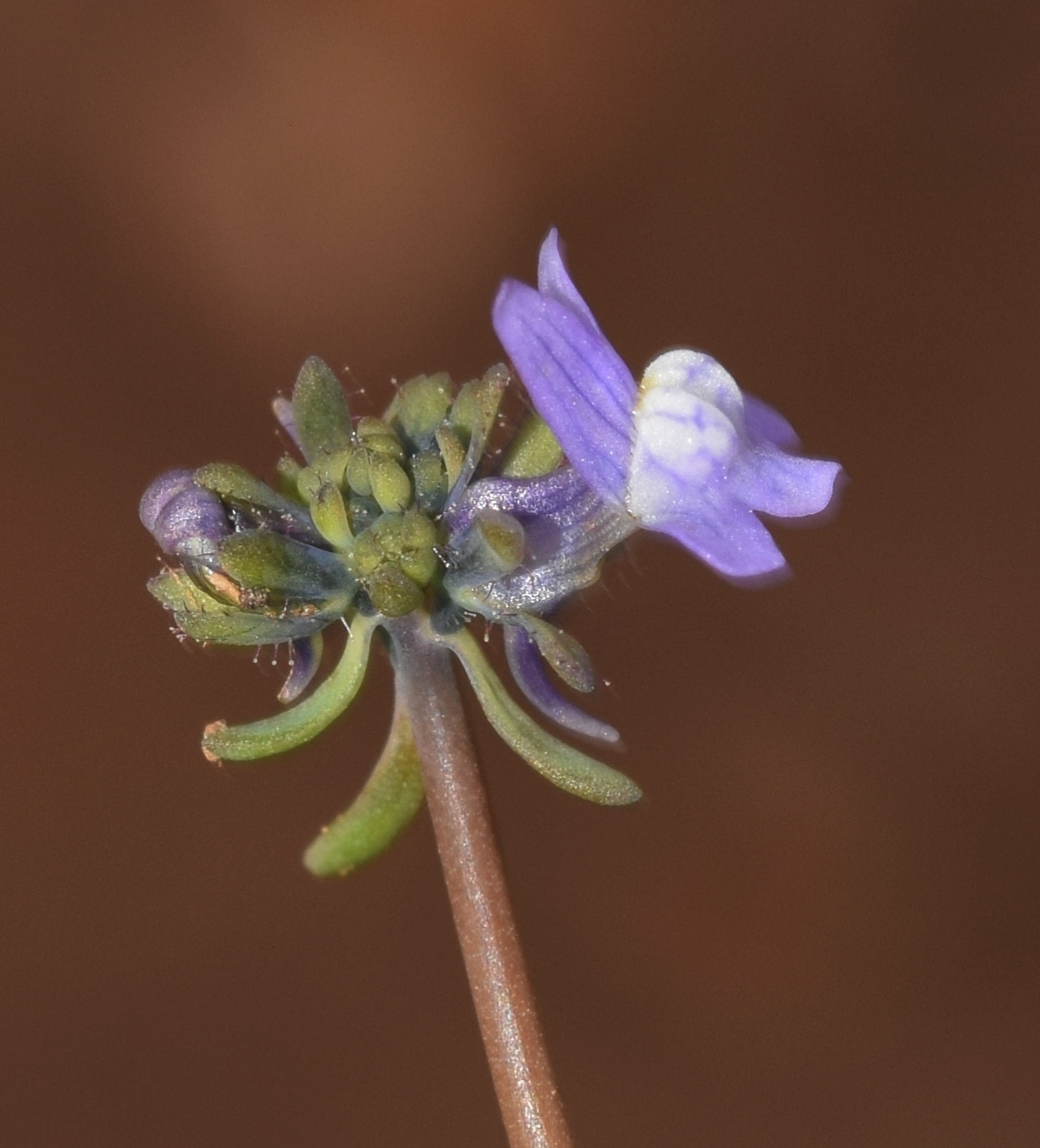
Corn toadflax (Linaria arvensis)
Care, watering, light and tips for Corn toadflax on Floravia.
Quick facts
- Family: Plantaginaceae
- Difficulty: Easy to care for
- Watering: every 7 days
- Light: Partial shade
- Temperature: 10–30 °C
About Corn toadflax
Linaria arvensis, commonly known as Field Toadflax, is a small annual herbaceous plant native to Europe, characterized by its delicate violet or bluish flowers, often with a yellow spot on the lower lip, arranged in loose spikes. Its upright and slender habit, reaching up to 30 cm in height, makes it ideal for rock gardens, path edges, or as part of wild meadows, adding a subtle and natural touch of color. It is an excellent choice for those seeking a low-maintenance summer bloom with a wild charm.
Native range
Europe, North Africa, and temperate Asia
Care tips
This species prefers full sun to light partial shade for optimal flowering, though it tolerates some shade. Watering should be moderate, allowing the substrate to dry slightly between waterings, as it is susceptible to excess moisture. It thrives in well-drained soils, preferably sandy or stony, and is not demanding regarding nutrients. A common mistake to avoid is overwatering, which can lead to root rot and a lack of blooms.
How to save a dying Corn toadflax
- Warning signs
- Yellowish or brown, wilted leaves; lack of flowering or dry flowers.
- First aid
- Transplant to well-drained, loose soil. Water moderately if substrate is dry.
- What kills it
- Overwatering (root rot) and compacted or very clayey soils.
- Can it be saved?
- Yes, if drainage and watering are corrected before severe root damage.