Ivy-leaved toadflax (Cymbalaria muralis)
Care, watering, light and tips for Ivy-leaved toadflax on Floravia.
Quick facts
- Family: Plantaginaceae
- Difficulty: Easy to care for
- Watering: every 3 days
- Light: Partial shade
- Temperature: 10–30 °C
About Ivy-leaved toadflax
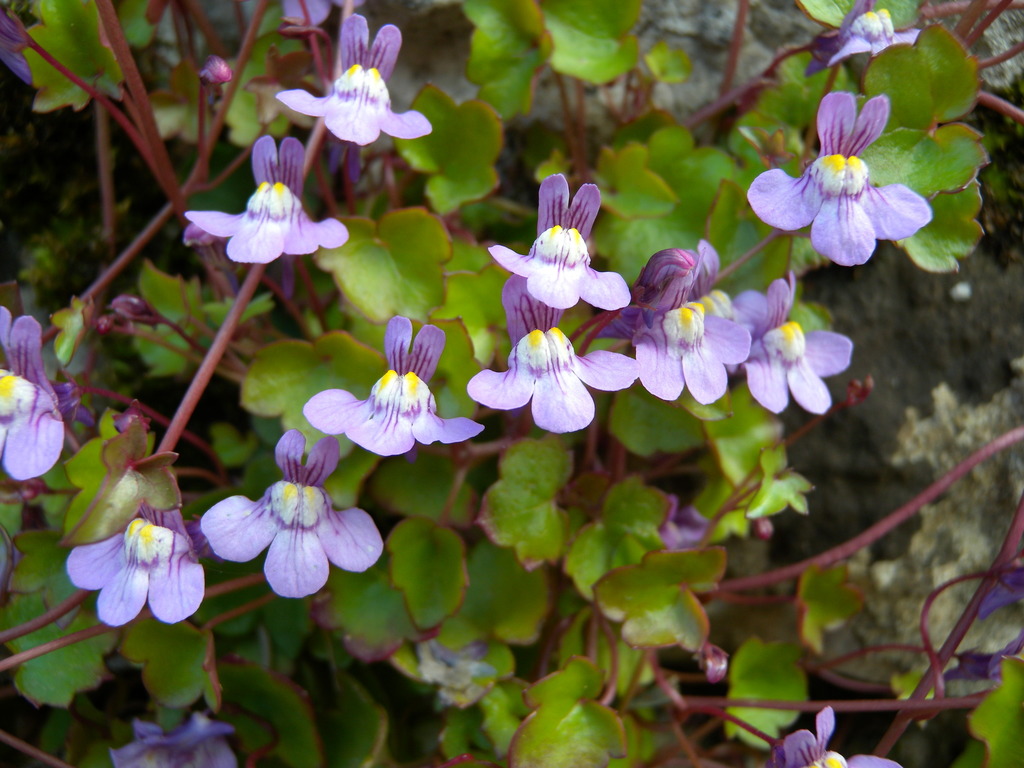
Cymbalaria muralis, commonly known as ivy-leaved toadflax or Kenilworth ivy, is a small, trailing perennial plant belonging to the Plantaginaceae family. It is characterized by its delicate, rounded leaves and tiny, pale lilac flowers resembling snapdragons. It is ideal for covering walls, rock crevices, or as a hanging plant, bringing a wild and charming touch to any shady spot.
Native range
Mediterranean region of Europe
Care tips
It prefers partial to full shade locations, as direct sunlight can scorch its delicate leaves. Watering should be moderate, keeping the substrate slightly moist but avoiding waterlogging, as it is susceptible to root rot. It adapts well to poor, rocky soils with good drainage; a common mistake is planting it in overly rich or compact soils. It is very hardy and rarely needs fertilization, thriving in relatively neglected conditions.
How to save a dying Ivy-leaved toadflax
- Warning signs
- Wilting, yellowing, or dry-edged leaves; stunted growth. It's a trailing plant, if it retracts significantly, something is wrong.
- First aid
- Check drainage and soil moisture. If very dry, water thoroughly; if waterlogged, improve drainage. Place in partial shade.
- What kills it
- Excessive direct sun or total lack of light. Also prolonged root waterlogging, which causes rot.
- Can it be saved?
- Yes, it's quite resilient! With quick adjustments to watering, light, and drainage, it will recover.