Crested pricklypoppy (Argemone platyceras)
Care, watering, light and tips for Crested pricklypoppy on Floravia.
Quick facts
- Family: Papaveraceae
- Difficulty: Easy to care for
- Watering: every 7 days
- Light: Partial shade
- Temperature: 10–30 °C
- Toxicity: Toxic to pets
About Crested pricklypoppy
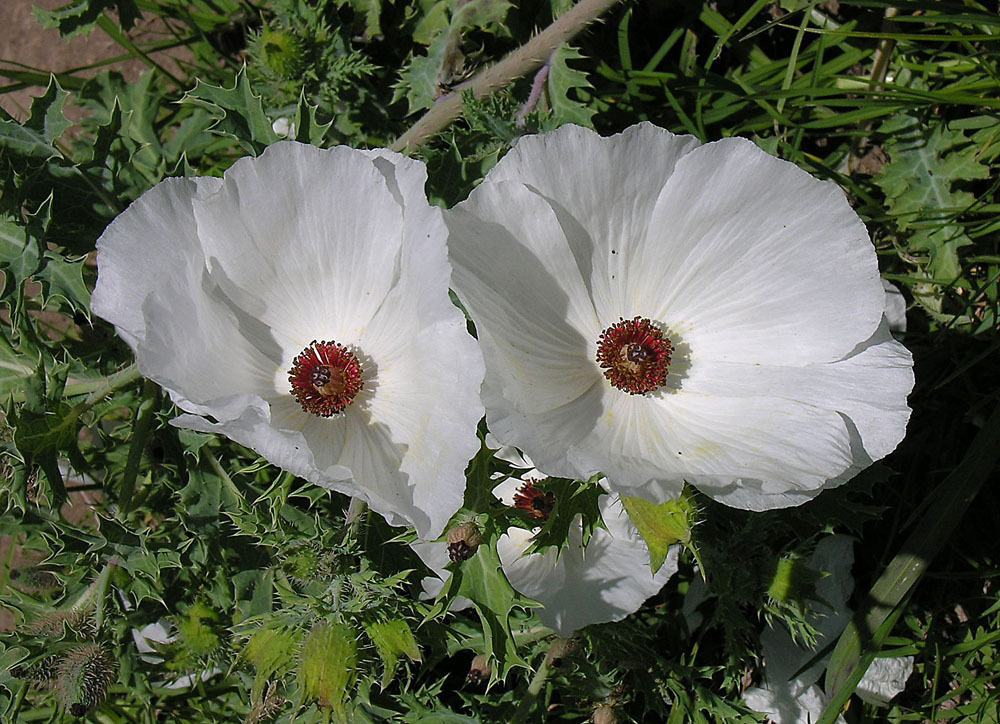
Argemone platyceras, commonly known as prickly poppy, is an annual or short-lived perennial native to North America, notable for its showy white or pale yellow, often crinkled flowers with a golden center. Its spiny, blue-green leaves give it a rugged, wild appearance, making it ideal for xeriscape gardens, rockeries, or as an accent plant in sunny borders. Its upright habit and abundant, albeit ephemeral, blooms add a touch of rustic and wild beauty to any landscape.
Native range
Southwestern United States and Mexico
Care tips
This prickly poppy thrives in full sun, requiring at least 6 hours of direct sunlight daily for optimal blooming. It prefers well-drained, sandy or stony soils, and is highly drought-tolerant, so watering should be sparse and only when the soil is completely dry. A common mistake is overwatering, which can lead to root rot; ensuring excellent drainage is crucial. It does not require regular fertilization, as it adapts to poor soils.
How to save a dying Crested pricklypoppy
- Warning signs
- Yellowish or whitish leaves, drooping stem, no flowering.
- First aid
- Ensure full sun and good drainage. If potted, consider repotting to sandy, loose soil. Reduce watering.
- What kills it
- Overwatering or shade. It does not tolerate heavy or waterlogged soils. Very drought-resistant.
- Can it be saved?
- Yes, if you act quickly. It's a rustic and resilient plant, but needs its specific conditions.